


Loading Search Form
Please Wait
Betty Battaglia Lic. RE Salesperson

My goal is to exceed your expectations in the service I provide and the results achieved.
Make sure to check out my blog for more information about tips for homeowners, news on the real estate market, and advice for anyone who is selling or buying a home.
Working effectively for my clients…
- Proficient in the tools necessary in the current environment to provide safe "virtual" service consistent with your comfort level
- Use of effective marketing strategies utilizing the vast resources Howard Hanna offers
- Extensive use of social media platforms to reach a vast audience
- Interior design skills enable me to set the stage for your home to shine, and sell for top dollar…if you are a buyer, I can help you visualize the potential in a home
- Strong interpersonal skills and an ability to work well with various personality types
- Very strong work ethic…no one will work harder for you
- Ten years of finance experience in banking and investments
- Interior Designer...I have overseen multiple renovation and design projects
- Working with clients to find and create the space where they are comfortable and their family feels at home was integral to my interior design work…it is just as important in my work as your real estate agent
- Gold Level Sales Award
- REALTOR® licensing
- B.A. in Finance, University of St. Thomas, St. Paul, MN
- Masters, Nazareth College, Pittsford, NY
- Interior Design program, Monroe Community College
- My family has lived in the Rochester area for over 20 years…my husband grew up here.
- My three children are educated by Pittsford Public Schools and are creating their own futures...still getting used to being an empty nester!
- Pittsford, Perinton, Brighton, Canandaigua, Henrietta, Honeoye Falls, Mendon, Penfield, Victor, Webster, Monroe County and Ontario County
- Tennis, Interior design, reading, volunteer activities, golf
- Fairy Godmothers of Greater Rochester
- Help Me Read
- Pay it Forward Fund

Specialties
Lowest Mortgage Rates in History: What It Means for Homeowners and Buyers
In July, the average 30-year fixed-rate mortgage fell below 3% for the first time in history.1 And while many Americans have rushed to take advantage of this unprecedented opportunity, others question the hype. Are today’s rates truly a bargain?
While average mortgage rates have drifted between 4% and 5% in recent years, they haven’t always been so low. Freddie Mac began tracking 30-year mortgage rates in 1971. At that time, the national average was 7.31%.2 As the rate of inflation started to rise in the mid-1970s, mortgage rates surged. It’s hard to imagine now, but the average U.S. mortgage rate reached a high of 18.63% in 1981.3
Fortunately for home buyers, inflation normalized by October 1982, which sent mortgage rates on a downward trajectory that would bring them as low as 3.31% in 2012.3 Since 2012, 30-year fixed rates have risen modestly, with the daily average climbing as high as 4.94% in 2018.4
So what’s causing today’s rates to sink to unprecedented lows? Economic uncertainty.
Mortgage rates generally follow bond yields, because the majority of U.S. mortgages are packaged together and sold as bonds. As the coronavirus pandemic continues to dampen the economy and inject volatility into the stock market, a growing number of investors are shifting their money into low-risk bonds. Increased demand has driven bond yields—and mortgage rates—down.5
However, according to National Association of Realtors Chief Economist Lawrence Yun, “the number one driver of low mortgage rates is the accommodating Federal Reserve stance to keep interest rates low and to buy up mortgage-backed securities.” According to Yun, “we will see mortgage rates stay near this level for the next 18 months because of the significance of the Fed’s stance.”6
HOW DO LOW MORTGAGE RATES BENEFIT CURRENT HOMEOWNERS?
Low mortgage rates increase buyer demand, which is good news for sellers. But what if you don’t have any plans to sell your home? Can current homeowners benefit from falling mortgage rates? Yes, they can!
A growing number of homeowners are capitalizing on today’s rock-bottom rates by refinancing their existing mortgages. In fact, refinance applications have surged over the past few months—and for a good reason.7 Reduced interest rates can save homeowners a bundle on both monthly payments and total payments over the lifetime of a mortgage.
The chart below illustrates the potential savings when you decrease your mortgage rate by just one percentage point. When it comes to refinancing, the bigger the spread, the greater the savings.
Estimated Monthly Payment On a 30-Year Fixed-Rate Mortgage
| Loan Amount | 4.0% | 3.0% | Monthly Savings | Savings Over 30 Years |
|---|---|---|---|---|
| $100,000 | $477 | $422 | $55 | $20,093 |
| $200,000 | $955 | $843 | $112 | $40,184 |
| $300,000 | $1,432 | $1,265 | $167 | $60,277 |
| $400,000 | $1,910 | $1,686 | $224 | $80,368 |
| $500,000 | $2,387 | $2,108 | $279 | $100,461 |
Be sure to factor in any prepayment penalties on your current mortgage and closing costs for your new mortgage. For a refinance, expect to pay between 2% to 5% of your loan amount.8 You can divide your closing costs by your monthly savings to find out how long it will take to recoup your investment, or use an online refinance calculator. For a more precise calculation of your potential savings, I’d be happy to connect you with a mortgage professional in our network who can help you decide if refinancing is a good option for you.
HOW DO LOW MORTGAGE RATES BENEFIT HOME BUYERS?
The current low rates can save you money on your mortgage payments. But they can also give a boost to your budget by increasing your purchasing power. For example, imagine you have a budget of $1,500 to put toward your monthly mortgage payment. If you take out a 30-year mortgage at 5.0%, you can afford a loan of $279,000.
Now let’s assume the mortgage rate falls to 4.0%. At that rate, you can afford to borrow $314,000 while still keeping the same $1,500 monthly payment. That’s a budget increase of $35,000!
If the rate falls even further to 3.0%, you can afford to borrow $355,000 and still pay the same $1,500 each month. That’s $76,000 over your original budget! All because the interest rate fell by two percentage points.If you’ve been priced out of the market before, today’s low rates may put you in a better position to afford your dream home.
On the other hand, rising mortgages rates will erode your purchasing power. Wait to buy, and you may have to settle for a smaller home in a less-desirable neighborhood. So if you’re planning to move, don’t miss out on the phenomenal discount you can get with today’s historically-low rates.
HOW LOW COULD MORTGAGE RATES GO?
No one can say with certainty how low mortgage rates will fall or when they will rise again. A lot will depend on the trajectory of the pandemic and subsequent economic impact.
Forecasters at Freddie Mac and the Mortgage Bankers Association predict 30-year mortgage rates will average 3.2% and 3.5% respectively in 2021.9,10 However, economists at Fannie Mae expect them to dip even lower to an average of 2.8% next year.11
Still, many experts agree that those who wait to take advantage of these unprecedented rates could miss out on the deal of a lifetime. “With rates now at all-time historic lows, it’s hard to imagine that people may be holding out for something even better," warns Paul Buege, President and COO of Inlanta Mortgage.12 Positive news about a vaccine or a faster-than-expected economic recovery could send rates back up to pre-pandemic levels.
HOW CAN I SECURE THE BEST AVAILABLE MORTGAGE RATE?
While the average 30-year mortgage rate is hovering around 3%, you can do a quick search online and find advertised rates that are even lower. But these ultra-low mortgages are typically reserved for only prime borrowers. So what steps can you take to secure the lowest possible rate?
- Consider a 15-Year Mortgage Term
Lock in an even lower rate by opting for a 15-year mortgage. If you can afford the higher monthly payment, a shorter mortgage term can save you a bundle in interest, and you’ll pay off your home in half the time.13
- Give Your Credit Score a Boost
The economic downturn has made lenders more cautious. These days, you’ll probably need a credit score of at least 740 to secure their lowest rates.14 While there’s no fast fix for bad credit, you can take steps to help your score before you apply for a loan:15
Dispute inaccuracies on your credit report.
- Pay your bills on time, and catch up on any missed payments.
- Hold off on applying for new credit.
- Pay off debt, and keep balances low on your credit cards.
- Don’t close unused credit cards (unless they’re charging you an annual fee).
- Make a Large Down Payment
The more equity you have in a home, the less likely you are to default on your mortgage. That’s why lenders offer better rates to borrowers who make a sizable down payment. Plus, if you put down at least 20%, you can avoid paying for private mortgage insurance.
- Pay for Points
Discount points are fees paid to the mortgage company in exchange for a lower interest rate. At a cost of 1% of the loan amount, they aren’t cheap. But the investment can pay off over the long-term in interest savings.
- Shop Around
Rates, terms, and fees can vary widely amongst mortgage providers, so do your homework. Contact several lenders to find out which one is willing to offer you the best overall deal. But be sure to complete the process within 45 days—or else the credit inquiries by multiple mortgage companies could have a negative impact on your credit score.16
| READY TO TAKE ADVANTAGE OF THE LOWEST MORTGAGE RATES IN HISTORY? Mortgage rates have never been this low. Don’t miss out on your chance to lock in a great rate on a new home or refinance your existing mortgage. Either way, we can help. I’d be happy to connect you with the most trusted mortgage professionals in my network. And if you’re ready to start shopping for a new home, I’d love to assist you with your search—all at no cost to you! Contact me today at [email protected] or 585-615-2834 to schedule a free consultation. |
|---|
The above references an opinion and is for informational purposes only. It is not intended to be financial advice. Consult a financial professional for advice regarding your individual needs.
Sources:
- CNN Business -
https://www.cnn.com/2020/07/16/success/30-year-mortgage-rates-record-low/index.html - Freddie Mac -
http://www.freddiemac.com/pmms/pmms30.html) - Value Penguin -
https://www.valuepenguin.com/mortgages/historical-mortgage-rates - Federal Reserve Bank of St. Louis -
https://fred.stlouisfed.org/graph/?g=NUh - Bankrate -
https://www.bankrate.com/mortgages/how-interest-rates-are-set/ - Washington Post -
https://www.washingtonpost.com/business/2020/06/25/mortgage-rate-remains-historic-low/ - Yahoo! Finance -
https://finance.yahoo.com/news/mortgage-refinancing-makes-big-comeback-151500346.html - Bankrate -
https://www.bankrate.com/mortgages/is-no-closing-cost-for-you/ - Freddie Mac June 2020 Quarterly Forecast -
http://www.freddiemac.com/fmac-resources/research/pdf/202006-Forecast.pdf - Mortgage Bankers Association Mortgage Market Forecast July 15, 2020 -
https://www.mba.org/news-research-and-resources/research-and-economics/forecasts-and-commentary - Fannie Mae July 2020 Housing Forecast -
https://www.fanniemae.com/resources/file/research/emma/pdf/Housing_Forecast_071420.pdf - Washington Post -
https://www.washingtonpost.com/business/2020/06/25/mortgage-rate-remains-historic-low/ - Investopedia -
https://www.investopedia.com/articles/personal-finance/042015/comparison-30year-vs-15year-mortgage.asp - Money -
https://money.com/mortgage-rates-below-three-percent/ - Experian -
https://www.experian.com/blogs/ask-experian/credit-education/improving-credit/improve-credit-score/ - Equifax -
https://www.equifax.com/personal/education/credit/report/understanding-hard-inquiries-on-your-credit-report/
Interior Painting Tips and Tricks
Image: Steve Cukrov / AdobesStock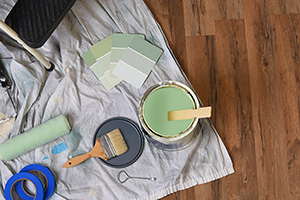
Learning a few tricks of the trade that painters use will assist you in your endeavor toward beautiful walls. Before choosing your paint, figure out how much you need—one gallon of paint covers approximately 350 square feet.
Common Paint Finishes and Primer
Flat paint. This opaque and sophisticated finish doesn't reflect light. However, it's non-washable, so use it on low-touch surfaces like ceilings or bedrooms.
Eggshell and satin paints. These have a low-luster finish but aren't durable enough for areas like kitchens and bathrooms. Use them in lower traffic areas, like a bedroom.
Semigloss and high-gloss paints. With a durable, shiny finish that's easy to clean, these are suitable for kids' rooms, kitchens, bathrooms, baseboards, and doors. Note: High shine means imperfections on the walls will be more noticeable.
Primer. Use on walls or other surfaces that have never been painted, like dry wall or unpainted wood. You don't need to use primer on white, clean walls or when painting dark colors on light walls, but it's essential when painting a light color over a dark wall. Cover stains such as grease spots or crayon markings with primer, or prime the whole wall.
Painting Techniques
Before painting, shake the can by rocking it in all directions, then stir thoroughly with a paint stick.
The recommended order to paint a room is ceilings first, then trim, then baseboards, and finally, walls. The first coat of paint should be completely dry before applying a second coat.
Use painter's tape to make clean lines along baseboards, moldings, and window casings. Use your thumbnail or a credit card to apply tape. Press firmly and don't remove the tape until the paint is completely dry, then peel off slowly.
Climbing a ladder with a large amount of paint isn't a good idea; pour paint into a smaller container when you need to paint trim near the ceiling.
Angled brushes and small rollers are special tools that will help you paint up to edges and along ceilings.
Cleanup
Before paint begins to dry on your brushes, soak them in soapy water, then wash until the water runs clear. Dab with paper towels and let dry. Trash used rollers—it may seem wasteful, but washing them for reuse wastes a lot of time and water. Store paint for touch-ups in a clearly labeled small jar with a tight-fitting lid. To store the rest of the unused paint, pound the top of the paint can shut with a mallet or hammer to make sure it's well sealed.
Try These Kitchen Sanitizing Tips
Image: Africa Studio / AdobesStock
A dirty kitchen may be an eyesore, but it can also be a breeding ground for harmful bacteria. Here are three tips to maintain a clean kitchen:
Make Your Own Sanitizing Cleaning Spray
To kill bacteria like E. coli and salmonella, you need a cleaning agent that effectively disinfects surfaces. Bleach is an excellent choice for this task because it contains hypochlorite, which destroys bacteria. Many commercially produced household cleaners contain bleach, but you can save money by making your own. Combine 1 part bleach to 10 parts water in a large spray bottle—many spray bottles even come with marks on the side to indicate the ratio of the mix. Add a drop of dish soap and you have the perfect disinfectant spray.
Sanitize or Replace Your Sponge Often
A sponge is the perfect incubator for harmful bacteria because it stays damp, which allows bacteria to multiply. Kill bacteria by microwaving your completely wet sponge for one minute—make sure there aren't any metallic parts. Another way to sanitize your sponge is to place it in the dishwasher and set the machine to dry at the hottest setting and longest run cycle. It's a good idea to replace your kitchen sponges every month.
Don't Forget to Hit Overlooked Spots
Wiping down countertops with a disinfectant solution is important, but don't forget frequently neglected surfaces. For example, the refrigerator door handle is a prime spot for bacteria—after all, everyone in the house probably touches it once a day. Similarly, your faucet, cupboard handles, and knobs deserve a frequent once-over. If you have a garbage can in your kitchen, don't forget to clean the lid; you can also take the empty can outside, fill it with water and a few squirts of dish soap, rinse, and let it sit in the sun to dry.
Get into the habit of giving your kitchen a quick sanitizing wipe down before preparing food and a deeper clean once a week. It could be vital to your health, and it will also keep your kitchen—the heart of your home—sparkling clean and fresh.
Home Sales Drop, Mortgage Rates Fall to New Lows
Image: Onephoto / AdobesStock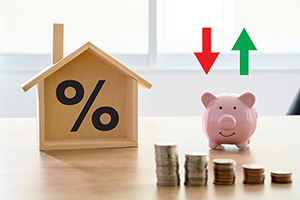
Mortgage rates are hitting historic lows. According to the Freddie Mac Primary Mortgage Market Survey, the 30-year fixed-rate mortgage for the week ending July 2 averaged 3.07%; this is the lowest rate ever recorded in the survey's 49-year history. At the same time last year, the 30-year fixed-rate mortgage averaged 3.75%. According to Sam Khater, chief economist for Freddie Mac, "On the economic front, incoming data suggest the rebound in economic activity has paused in the last couple of weeks with modest declines in consumer spending and a pullback in purchase activity." All of this suggests that the 30-year fixed-rate mortgage could drop below 3% by the end of 2020.
Home Sales Are Down
The coronavirus outbreak led to a decline in existing-home sales over the past three consecutive months. According to the National Association of Realtors (NAR), every sales region in the country experienced drops in both month-over-month and year-over-year sales. "Sales completed in May reflect contract signings in March and April—during the strictest times of the pandemic lockdown and hence the cyclical low point," says Lawrence Yun, chief economist for NAR. As the economy starts up again, Yun expects home sales to increase in the second half of the year.
Housing Inventory Falls Below Last Year's Levels
By the end of May, there were 1.55 million units available for sale, up 6.2% from a month earlier but down 18.8% from May 2019. At the current sales pace, the housing stock would supply the market for 4.8 months; in comparison, there was a 4-month supply in April and a 4.3-month supply a year ago. Of all the homes sold in May, 58% remained on the market for less than a month. On average, properties remained available for sale for 26 days, unchanged from May 2019.
Home Prices Are Up
Home sales might have declined, but home prices are still increasing. The median existing-home price increased in every area except the West. This was the 99th consecutive month of year-over-year price increases. Yun believes that a boost to new home construction is needed to meet an increase in housing demand; "otherwise, home prices will rise too fast and hinder first-time buyers, even at a time of record-low mortgage rates."
Regional Sales Breakdown
Northeast: Existing-home sales annual rate of 470,000; a decrease of 13% from April 2020 and 29.9% from May 2019. The median sales price increased 7.8% from May 2019.
Midwest: Existing-home sales annual rate of 990,000; a decrease of 10% from April 2020 and 20.2% from May 2019. The median sales price increased 3% from May 2019.
South: Existing-home sales annual rate of 1.73 million; a decrease of 8% from April 2020 and 25.1% from May 2019. The median sales price increased 2.1% from May 2019.
West: Existing-home sales annual rate of 720,000; a decrease of 11.1% from April 2020 and 35.1% from May 2019. The median sales price decreased 0.2% from May 2019.
Seven Things to Consider Before Hiring a Contractor
Image: Tomasz Zajda / AdobesStock
Are you thinking about remodeling your home or starting a backyard patio project? If you're not a detailed or ambitious person, you may need to hire a contractor to perform some or all the work. Do your homework and be crystal clear with your remodeling or landscaping contractor to reduce miscommunication and expensive errors. Here are some time-tested tips from FindLaw.com, the world's leading online legal resource:
1. Does it make sense?
Before moving too quickly, ask yourself if it makes sense to remodel. Are other neighbors enhancing the exteriors of their homes and improving their yards? Are you preparing to sell your house or planning to stay a while? While an important move, remodeling and landscaping can be expensive, and you may not fully recoup your investment.
2. Do your homework.
Before calling a contractor, figure out what you want. Visit showrooms, talk to friends and neighbors who have recently remodeled, or read home and landscaping magazines. Start a notebook to collect your ideas, product information, and samples.
3. Build a budget.
Keep in mind, especially when remodeling an older home, there may be unexpected surprises (such as plumbing or electrical) that could drive up costs. To be on the safe side, add 20% to the generally recommended costs of a remodeling project.
4. Get a recommendation.
When searching for a contractor, word-of-mouth is a reliable method. Ask your friends and family if they have worked with a contractor or landscaper recently, or reach out to your real estate agent for a professional they recommend. Make sure the contractor is licensed, bonded, and insured. Always get at least three proposals from different contractors and compare the details.
5. Check your permits.
Be wary of the contractor who says you don't need to pull a permit from city hall for your project. A permit represents the minimum construction standard set by a local community and protects the homeowner from shoddy construction or landscaping practices. If you live in a historic neighborhood, there may be more restrictive guidelines to follow.
6. Get it in writing.
Never agree to hire a contractor, even if it's your brother-in-law, on a verbal agreement. Always insist on a contract. Be precise about what services will be performed and due dates. Specify what products and materials will be used. Spell out when payments will be made to the contractor, and clarify your rights if the work is not completed to your satisfaction. If need be, contact an attorney to review the document before signing.
7. Be completely satisfied.
Never pay for the entire project upfront before construction begins. In most cases, you'll put down 25% of the total project before it starts, then make payment portions at milestones up until its completion. Withhold your final payment until the project is completed to your satisfaction.
Shopping for a Home: When a ''Deal'' Isn't a Deal
Image: karamysh / AdobesStock
In many real estate markets across the United States, home affordability is a major obstacle to homeownership. There's a short supply of entry-level starter homes, and oftentimes, homebuyers are in a crunch looking for a "deal"—a home priced below market value or one that doesn't involve a bidding war to buy. However, not every home that appears to be a deal is one. Here's how to know when a deal isn't a deal.
It Needs a Lot of Work
A home that needs a lot of work can be a deal, but only if its expenses are already built into the sales price. For example, a home priced $50,000 below market value because it needs $50,000 of work is fair. But a home priced $20,000 below market value needing $50,000 of work is a bad deal. The seller is asking the buyer to pay over market value, with the costs of repairs considered. Think carefully about buying a house that needs major renovations—the costs often outweigh the savings.
Everywhere Becomes a Drive
Some homebuyers are willing to sacrifice location for a home they can afford. Living near or far away from a city can sometimes be the difference between being a homeowner and not. But if you've added an hour each way to your work commute, those extra two hours a day spent in your car or on public transportation could get old in a hurry. You might wind up regretting buying a home so far away from your job, your family and friends, your favorite restaurant, or your family doctor. You'll have to decide between dollar savings and the inconvenience of traveling long-distance everywhere.
Too Many Compromises
Every homebuyer begins a search with a list of expectations and must-haves. Depending on the price, you might be willing to compromise some of the things on your wish list. But compromising on things that are most important to you—the number of bedrooms, a good school district, a crime-free area—could end up being a daily drain on you. Giving up too many of your priorities might not be worth the savings.
Affordability is an issue in real estate markets, so finding deals on homes sounds great. But a low price doesn't necessarily equal a deal, and it's helpful to recognize those situations. As a skilled real estate professional, I can help you find the home that best fits your lifestyle.
Mortgage rates are at historic lows. Now is a good time to buy or list your home. Contact me today!
Buyers: Are You Ready for a Bidding War?
With businesses reopening throughout the country and some experts indicating early signs of a much-anticipated economic recovery, more homebuyers are actively entering the housing market this summer. Today, housing is truly driving the U.S. economy forward. With so many buyers looking for homes to purchase and so few houses for sale right now, there’s a disconnect between supply and demand. This imbalance is pushing home prices upward while driving more bidding wars and multiple-offer scenarios. Danielle Hale, Chief Economist at realtor.com explains:
“People are surprised that prices are rising, not falling, because in the last recession home prices fell, the difference this time is the severe shortage of homes for sale…We are seeing bigger price increases with [a limited] number of homes...That is likely to lead to more competition and potentially multiple offers and bidding wars.”
According to the recent Realtors Confidence Index (RCI) survey conducted by the National Association of Realtors (NAR), this trend is growing:
“On average, there were about three offers on a home that closed in May, up from just about two in April 2020 and in May 2019 (2.3 offers).”
HousingWire also indicates:
"42% of homeowners who made a purchase during the January to May time period ended up in a bidding war, demonstrating the strong demand for homes amid low inventory."
With more people returning to work we’ll continue to see the number of interested buyers increase. So, if you’re among the many people looking for a home to buy this summer, it’s important to ensure you have the right guidance from the start. This way, you make sure your offer stands out from the crowd when it really counts. Here are two tips to follow.
1. Hire a Trusted Local Expert
A trusted local real estate professional matters more than ever right now, as noted in a recent survey shared by NAR. In fact, according to respondents, 54% of buyers and 62% of sellers indicated that “Particularly during the pandemic, a real estate agent’s guidance is especially valued.”
We’re not in a normal market. We are in one of the greatest health crises our nation has ever seen. The pandemic has had a dramatic impact on the journey consumers must take to purchase a home. To successfully navigate the landscape today, you need a true expert on your side.
2. Get Pre-Approved for a Mortgage
When there are more buyers than sellers on the market, the process to find a home becomes much more challenging. One way to show you’re serious about buying a home is to work with a lender to get pre-approved for a mortgage before starting your search. With a pre-approval letter, sellers will see your true desire to buy this year, potentially helping your offer rise to the top.
If this is the year you’re ready to buy, contact me at [email protected] to get the process started so you can make sure your offer is a strong one when the competition heats up.
Shopping Locally Helps Support Your Community
Once
upon a time, consumers shopped at the butcher for meat, the drug store
for pharmaceuticals, and the grocer for vegetables and food staples. Now
you can have the tires changed on your vehicle while you shop for
groceries and your teenage daughter browses clothing on the clearance
rack—all under the same roof. But turning your attention to the
mom-and-pop shops just around the corner from your house or the summer
farmers market in a local lot on Saturdays can benefit everyone. Keeping
these independent small businesses alive is in your community’s best
interest. Here’s why:
Increases Property Value
Your neighborhood’s walkability to nearby shops affects your home’s
value. Having amenities within walking distance boosts your property
value by thousands of dollars. Shopping locally keeps small-town farms,
artisans, and employees working. When you buy from the people who live
near you, supporting local government and independent businesses, you
boost the vitality of your community and make it an attractive place to
live.
Boosts Your Local Economy
Frequenting stores within a few miles of your home saves you time and
gasoline. When you shop from businesses that sell products from local
sources, like small farms, it’s a joint effort of saving your
hard-earned money and giving back to your community. Your consistent
business to local shops also means the products are there when you need
them, virtually a walk or bike ride away. If they don’t carry what you
need, ask your local shop if they will stock it for you.
Creates Beneficial Connections
The shops and businesses around your home are part of your community.
Independent owners have more freedom to work with a customer and develop
a beneficial relationship. A lot can be said for good service and the
willingness to make a deal with a business that really knows you.
Shopping locally makes a difference not only in helping a community
survive but also helping it thrive.
Record-Low Mortgage Rates Entice First-Time Homebuyers
The
coronavirus pandemic has had a significant impact on the housing
market, with social distancing lockdowns disrupting home sales in most
states from mid-March through April. However, the pandemic is not
deterring some buyers; according to the National Association of Realtors
(NAR), first-time buyers accounted for 36% of all sales in April, up
from 34% a month earlier. According to the NAR "2019 Profile of Home
Buyers and Sellers," first-time buyers were responsible for 33% of all
sales in 2019. Individual investors and second-home buyers—two groups
who typically account for cash sales—also saw potential in the market,
purchasing 10% of all homes sold in April.
Mortgage Rates Near Historic Lows
First-time buyers are entering the housing market due in large part to
advantageous mortgage rates. For the last full week in May, the 30-year
fixed-rate mortgage averaged 3.15%; this is the lowest rate ever
recorded in Freddie Mac’s "Mortgage Market Survey" over the past 50
years. According to Sam Khater, chief economist for Freddie Mac, "These
unprecedented rates have certainly made an impact, as purchase demand
rebounded from a 35% year-over-year decline in mid-April to an 8%
increase as of last week—a remarkable turnaround given the sharp
contraction in economic activity." He added that refinance activity
remains high, and the average loan size of refinance borrowers this year
has declined $70,000 due to the low mortgage rates. This indicates that
a broad base of borrowers refinanced while mortgage rates were in
record low territory, a situation that will ultimately benefit the
economy. Despite a recent rise, mortgage rates are expected to remain at
record lows; for the week ending June 4, 2020, the 30-year, fixed-rate
mortgage averaged 3.18%. According to Lawrence Yun, chief economist for
the NAR, record-low mortgage rates "will be the key factor driving
housing demand as state economies steadily reopen. Still, more listings
and increased home construction will be needed to tame price growth."
Inventory Remains Low
Although first-time buyers are active in the current housing market,
they are having to contend with inventory shortages. There were 1.47
million units available for sale in April, down 1.3% from March and down
a significant 19.7% from April 2019. At the current sales pace, this
level of inventory would supply the housing market for only 4.1 months,
up from a 3.4-month supply a month ago but down from a 4.2-month supply a
year ago.
Higher Prices but Lower Sales
"The listings that are on the market are still attracting buyers and
boosting home prices," according to Yun. Indeed, every sales region in
the country experienced increases in median home prices. What’s more,
April marked the 98th consecutive month of year-over-year price gains.
Yet while prices increased, overall existing-home sales declined in
April—as should be expected during a pandemic. Existing-home sales fell
22.5% month over month, which represented the largest decrease since
July 2010. The average property remained available for sale for 27 days
in April, down from 29 days a month ago but up from 24 days a year ago.
Of all the homes sold in April, 56% remained on the market for less than
a month.
Regional Breakdown
Northeast
- Existing-home sales annual rate of 540,000; a decrease of 16.9% from
March 2020 and 18.2% from April 2019. At $312,500, the median sales
price increased 8.7% from April 2019.
Midwest - Existing-home sales
annual rate of 1.10 million; a decrease of 12% from March 2020 and 8.3%
from April 2019. At $229,200, the median sales price increased 9.3% from
April 2019.
South - Existing-home sales annual
rate of 1.88 million; a decrease of 17.9% from March 2020 and 16.8% from
April 2019. At $249,400, the median sales price increased 6.4% from
April 2019.
West - Existing-home sales annual
rate of 810,000; a decrease of 25% from March 2020 and 27% from April
2019. At $419,300, the median sales prices increased 6.1% from April
2019.
Three Tips to Prevent Pests from Moving In
The
ick factor of a pest infestation is understandable—who wants ants
crawling all over the kitchen counter? But pests can also cause
substantial damage to property that costs time and money to fix. If you
want to prevent these unsavory guests from moving in and taking over,
try these three basic steps.
Lock Them Out Forever
Pests won’t be a problem if they can’t gain access to your house.
Eliminating all entry points takes determination and hard work, but the
reward is worth it. Pay special attention to areas like gables near the
rooftop and any holes through which wiring comes in. Cable wires should
fit snugly in the hole and there should be no extra space around the
wires. Make sure each window closes completely and exterior doors don’t
have gaps. Seal cracks and holes on the outside of your home, and
install screens over chimney vents and openings.
Don't Let Them Find Food
Pests have a keen sense of smell. Eliminate all food sources that
attract pests as they will grow and multiply where food is readily
available. Keep all food in the kitchen sealed and put away when not in
use. Dishes, wrappers, and trash should be dealt with promptly, with
outside trash sealed in a container. Make sure floors are swept and
vacuumed; keeping the house tidy will eliminate small crumbs that may
not be visible to the naked eye.
Remove Their Water Sources
Water is the most sought-after resource by humans and animals,
including pests. If water is available, they will find it. Fix any
dripping faucets and make sure that your pet’s drinking water is changed
daily. Water promotes mold growth and becomes stagnate when left
sitting too long. This is an open invitation for most pests, no matter
the season.
The best approach to pest control is to stop them from entering your
home. Once pests have taken over, it’s too late for prevention—you’ll
need to call in a professional.
Top Five Tips for Staying Productive While Working from Home
When
you work from home, it can be difficult to sustain the same level of
focus that you have in the office. Your home is where you relax, play
games, and watch movies. All those distractions are within arm’s reach,
and it can be difficult to avoid temptation. Follow these tips to remain
productive while working from home.
1. Dress for Success
It may feel silly to get dressed when you don’t need to leave your
house, but spending days on end in your pajamas will impact your ability
to be productive. It’s important that you keep your daily routine. You
want to continue activities you would normally do if you were heading to
work, like taking a shower and getting ready in the morning. After you
get dressed, it will be easier to push yourself into work mode.
2. Set Strict Hours
Just because you’re at home doesn’t mean you don’t need to have
consistent work hours. Setting work hours for yourself will keep you on
track. Don’t let the day get away from you. Give yourself a regularly
scheduled lunch break just like you would have at the office.
Maintaining the same work hours you had before you worked from home will
help you to retain a sense of normalcy.
3. Set Daily Goals
Each morning before you get started, make a list of goals you want to
accomplish during your workday. Every time you do a task on your list,
cross it out. Having a physical list and being able to cross off goals
when you have finished them is very rewarding. Let your to-do list guide
your day. The more you are able to cross off your list, the easier it
will be to continue working.
4. Take Exercise Breaks
If you are finding it difficult to focus, take a break, but don't allow
yourself to do anything too fun or relaxing when you’re on a work
break. Enjoyable activities will only serve to distract you, but
exercising should keep you focused and energized. You don’t need to head
to the gym to work out; just pull up a quick exercise routine on your
phone and use it to center yourself before you get back on task.
5. Hide Your Phone
Unless you use your phone for work, you should turn your phone off
until you’ve finished your tasks for the day. Your phone is a huge
distraction, and it takes only one text message notification to
potentially derail your focus. For the hours when you are working, set
your phone aside and keep your focus entirely on your job.
Home Improvements That Give the Highest Return on Investment
When
you’re selling a house, making improvements beforehand can help
maximize the home’s value. Even if you have no plans to relocate in the
near future, enhancing your living conditions makes sense. Use this
information from Remodeling magazine’s annual "Cost vs. Value Report" to
get the best return on your investment when you sell.
Invest In Exterior Upgrades
Improvements to your home’s exterior can pay for themselves by drawing
in potential buyers. If you have no plans to sell, they positively
change the ambiance of your property and boost curb appeal. Adding
manufactured stone veneer increases value the most—up to 95%. This
synthetic material installs just like real stone. Upgrading the exterior
of a home with low-energy windows and vinyl siding is also a good
investment. You can recuperate up to 75% of the cost of this particular
home improvement.
Replace the Garage Door
Upgraded garage doors yield a high return (94%), but you’ve got to
choose the correct type. The best garage doors feature durable
materials, insulation, and energy-saving finishes. Resilient garage door
materials include aluminum, fiberglass, and steel. If you want the look
of wood, choose composites, as real wood doesn’t stand up to weather
challenges.
Add a Deck in Time for Summer
Adding a wood deck usually yields a slightly larger return (72%) than
composite materials (66%) because the upfront cost is cheaper. But
you’ll want to check with your local home improvement center because a
wood deck can be more expensive to maintain. When it comes to sizing,
keep the square footage relevant to the proportions of the yard and
home. Generally, 300 square feet is an ideal size. Regardless of the
measurements you choose, make sure to include a railing to enhance
safety.
Remodel the Kitchen, the Heart of the Home
Kitchen remodels rank at the top for homeowners and buyers alike.
However, bigger changes aren’t necessarily better. Smaller remodels
garner more returns on investments; they can repay up to 27% more
compared to major upgrades. Energy-efficient appliances, updated
flooring, modern countertops, and upgraded sinks with contemporary
faucets make the best improvements. Modernizing the cabinets also allows
for good return of costs. If you can’t replace the cupboards, repaint
them and add updated hardware.
Overhaul the Bathroom
Bathroom remodels follow the same guidelines as kitchen renovations.
Carefully chosen updates yield larger returns than all-out, upscale
remodels. It pays to upgrade counters, fixtures, lighting, tiles, and
toilets. You can pick and choose, but it’s a good idea to tackle the
oldest items first.
Add Value To Your Home With These 9 DIY Improvements
Whether you’re prepping your house to go on the market or looking for ways to maximize its long-term appreciation, these nine home improvement projects are great ways to add function, beauty, and real value to your home.
The best part is, once you’ve secured the materials, most of these renovations can be completed over the course of a weekend. And they don’t require a lot of specialized skills or experience. So grab your toolbox, then get ready to boost your home’s appeal AND investment potential!
1. Spruce Up Your Landscaping
Landscaping improvements can increase a home’s value by 10-12%.1 But which outdoor features do buyers care about most? According to a survey of Realtors, a healthy lawn is at the top of their list. If your lawn is lacking, overseeding or laying new sod can be a worthwhile investment—with an expected return of 417% and 143% respectively.1
Planting flowers is another great way to enhance your home’s curb appeal. And if you choose a perennial variety, your blooms should return year after year. For an even longer-term impact, consider planting a tree. According to the Council of Tree and Landscape Appraisers, a mature tree can add up to $10,000 to the value of your home.2
2. Clean The Exterior
When it comes to making your house shine, a sparkling facade can be just as important as a clean interior. Real estate professionals estimate that washing the outside of a house can add as much as $15,000 to its sales price.3
A rented pressure washer from your local home improvement store can help you remove built-up dirt and grime from your home’s exterior, walkway, and driveway. Just be sure to read the instructions carefully—and only use it on surfaces that can withstand the intensity. When in doubt, a scrub brush and bucket of sudsy water will often do the trick.
3. Add A Fresh Coat Of Paint
New paint can have a big impact on both the appearance and value of a property. In fact, it’s one of the most effective ways to revitalize a home’s exterior, update its interior, and make it appear larger and brighter. The best part? Painting is relatively easy and inexpensive!
To get the maximum return at resale, stick with a modern but neutral color palette that will appeal to a broad range of buyers. According to a recent survey of home design experts, cool neutrals are a safe bet when it comes to interior paint. And respondents chose white and gray as the best exterior paint colors to use when selling a home.4 However, it’s important to consider a property’s architecture, existing fixtures, and regional design preferences, as well.
4. Install Smart Home Technology
In a recent survey, 78% of real estate professionals said their buyer clients were willing to pay more for a home with smart technology features.5 The most requested smart devices? Thermostats (77%), smoke detectors (75%), home security cameras (66%), and locks (63%).6
The good news is, many of these gadgets are fairly easy to install. And some of them, including smart thermostats and light bulbs, will pay for themselves over time by making your home more energy efficient. In fact, many manufacturers report that smart thermostats can cut back on heating and cooling costs by 10-20%.7
If you already own a smart speaker, like Amazon Alexa or Google Home, choose devices that will pair with your existing technology. This will enable you to create a truly integrated (and in many cases voice-activated) smart home experience.
5. Modernize Your Window Treatments
Smart—or motorized—blinds are also growing in popularity, and several manufacturers make models you can order and install on your own. But they’re not the only way to modernize your window treatments.
If you have old aluminum blinds, consider replacing them with plantation shutters, which are energy efficient, durable, and have strong buyer appeal.8 Roman and roller shades are another stylish alternative, and they come in a variety of colors and fabrics, which you can personalize to meet your design and privacy preferences.
Fortunately, upgrading your blinds has gotten easier and less expensive in recent years. There are a number of retailers that specialize in affordable window coverings that are simple to measure and hang yourself.
6. Replace Outdated Fixtures
Drastically transform the look and feel of your home by swapping out dingy and dated fixtures for contemporary alternatives. Start by assessing your current light fixtures, faucets, cabinet hardware, door knobs, and even switch plates. Then prioritize replacing those that are particularly outdated or in highly-visible areas, such as your entryway or kitchen.
Even if your home is fairly new, consider trading your builder-grade fixtures for higher-end options to give it a more upscale appearance. And forget the old rule about sticking to one metal tone throughout your property. According to designers, mixing metal finishes can add interest and character to a space.9
For more designer insights and decor trends, email me for a free copy of “Top 5 Home Design Trends for a New Decade.”
7. Upgrade Your Bathroom Mirror
A minor bathroom remodel offers one of the best returns on investment, with a $1.71 increase in home value for every $1 you spend.10 We’ve already explored several improvements you can make to your bathroom: new paint, fixtures, and hardware. Now complete the look by upgrading your vanity’s mirror.
Before you purchase a new mirror, examine your existing one to see how it is attached to the wall. Some vanity mirrors are glued to the wall and difficult to remove without shattering the glass or damaging the sheetrock behind it.11
If you prefer to keep your existing mirror, you can paint the frame—or add one if it’s currently frameless. There are several online retailers that will send you the frame components cut to your specifications, which you can assemble and mount yourself. Much like a work of art, your vanity mirror serves as a focal point for your bathroom, so let your creativity shine through!
8. Shampoo Your Carpet
Carpet is notorious for trapping dust, dirt, and allergens. It’s one of the reasons that most buyers prefer hard surface flooring.12 But if you love your carpet, or you’re not ready to invest in an alternative, make an effort to keep it clean and odor-free.
To properly maintain your carpet, you should vacuum it weekly. Experts also recommend a deep shampoo at least every two years.13 Fortunately, this is a cheap and easy DIY project you can knock out in about 20 minutes per room. According to Consumer Reports, you can rent a machine and purchase cleaning fluid and supplies for around $90. With an average return on your investment of 169%, it’s well worth the effort and expense.14
9. Customize Your Closet
Real estate professionals estimate that a closet remodel can add $2500 to a home’s selling price. And while a professional renovation can cost upwards of $6000, there are many high-quality DIY closet systems you can customize and install yourself.15
Experts recommend taking a thorough inventory of your wardrobe and accessories before you get started. Make sure frequently-worn pieces are easy to reach, and store seasonal and seldom-used items on high shelves. Place shoe racks near the closet entrance so they are easy to access.16 A little planning can go a long way toward building a closet that you (and your future buyers!) will love.
GET A COMPLIMENTARY ANALYSIS OF YOUR PROJECT
We’ve
been talking averages. But the truth is, the actual impact of a home
improvement project will vary depending on your particular home and
neighborhood. Before you get started, contact me to schedule a free
virtual consultation. I can help you determine which upgrades will
offer the greatest return on your effort and investment.
Sources:
- HomeLight -
https://www.homelight.com/blog/improve-curb-appeal-landscaping/ - National Association of Realtors -
https://www.realtor.com/advice/home-improvement/landscape-renovations-that-pay-off/ - HouseLogic.com - https://www.houselogic.com/save-money-add-value/add-value-to-your-home/adding-curb-appeal-value-to-home/
- Fixr -
https://www.fixr.com/blog/2020/01/14/paint-color-trends-in-2020/ - T3 Sixty -
https://blog.coldwellbanker.com/wp-content/uploads/2018/01/CES2018-Smart-Homes-An-Emerging-Real-Estate-Opportunity.pdf - Consumer Reports -
https://www.consumerreports.org/smart-home/smart-home-tech-upgrades-to-help-sell-your-house/ - American Council for Energy Efficient Economy
https://www.aceee.org/sites/default/files/publications/researchreports/a1801.pdf - Forbes - https://www.forbes.com/sites/trulia/2016/07/05/10-upgrades-under-1000-that-increase-home-values-2/#47b0d3162e60
- Insider -
https://www.insider.com/home-design-rules-you-should-be-breaking-2020-1 - Zillow -
https://www.zillow.com/sellers-guide/roi-for-bathroom-remodel/ - Lowes -
https://www.lowes.com/n/how-to/remove-a-bathroom-mirror - HomeLight -
https://www.homelight.com/blog/what-flooring-increases-home-value/ - Angie’s List -
https://www.angieslist.com/articles/how-often-should-i-clean-my-carpets.htm - HomeLight -
https://www.homelight.com/blog/projects-that-increase-home-value/ - National Association of Realtors - https://www.nar.realtor/research-and-statistics/research-reports/remodeling-impact
- EasyClosets -
https://www.easyclosets.com/tips-ideas/2016/10/02/how-to-plan-your-walk-in-closet/
Is Now the Right Time to Buy or Sell a Home?
Traditionally, spring is one of the busiest times of the year for real estate. However, the coronavirus outbreak—and subsequent stay-at-home orders—led many buyers and sellers to put their moving plans on hold. In April, new listings fell nearly 45%, and sales volume fell 15% compared to last year.1
Fortunately, as restrictions have eased, we’ve seen an uptick in market activity. And economists at Realtor.com expect a rebound in July, August, and September, as fears about the pandemic subside, and buyers return to the market with pent-up demand from a lost spring season.2
But given safety concerns and the current economic climate, is it prudent to jump back into the real estate market?
Before you decide, it’s important to consider where the housing market is headed, how it could impact your timeline and ability to buy a home, and your own individual needs and circumstances.
WHAT’S AHEAD FOR THE HOUSING MARKET?
The economic aftermath of the coronavirus outbreak has been severe. We’ve seen record unemployment numbers, and economists believe the country is headed toward a recession. But people still need a place to live. So what effect will these factors have on the housing market?
Home Values Projected to Remain Stable
Many Americans recall our last recession and assume we will see another drop in home values. But the 2008 real estate market crash was the cause—not the result—of that downturn. In fact, ATTOM Data Solutions analyzed real estate prices during the last five recessions and found that home prices actually went up in most cases. Only twice (in 1990 and 2008) did prices fall, and in 1990 it was by less than one percent.3
Many economists expect home values to remain relatively steady this time around. And so far, that’s been the case. As of mid-May, the median listing price in the U.S. was up 1.4% from the same period last year.4
Demand for Homes Will Exceed Available Supply
There’s been a shortage of affordable homes on the market for years, and the pandemic has further hindered supply. In addition to sellers pulling back, new home starts fell 22% in March.5 In fact, Fannie Mae doesn’t foresee a return to pre-pandemic construction levels before the end of 2021.6
This supply shortage is expected to prop up home prices, despite recessionary pressures. Fannie Mae and the National Association of Realtors predict housing prices will rise slightly this year7, while Zillow expects them to fall between 2-3%.8 Still, that would be a far cry from the double-digit declines that occurred during the last recession.
Government Intervention Will Help Stabilize the Market
Policymakers have been quick to pass legislation aimed at preventing a surge in foreclosures like we saw in 2008. The Coronavirus Aid, Relief, and Economic Security (CARES) Act passed by Congress gives government-backed mortgage holders who were impacted by the pandemic up to a year of reduced or delayed payments.10
The Federal Reserve has also taken measures to help stabilize the housing market, lower borrowing costs, and inject liquidity into the mortgage industry. These steps have led to record-low mortgage rates that should help drive buyer demand and make homeownership more affordable for millions of Americans.11
HOW HAS THE REAL ESTATE PROCESS CHANGED?
As the pandemic hit, real estate and mortgage professionals across the country revised their processes to adapt to shifting safety standards and economic realities. While these new ways of conducting business may seem strange at first, keep in mind, military clients, international buyers, and others have utilized many of these methods to buy and sell homes for years.
New Safety Procedures
The safety of our clients and our team members is our top priority. That’s why we’ve developed a process for buyers and sellers that utilizes technology to minimize personal contact.
For our listings, we’re holding online open houses, offering virtual viewings, and conducting walk-through video tours. We’re also using video chat to qualify interested buyers before we book in-person showings. This enables us to promote your property to a broad audience while limiting physical foot traffic to only serious buyers.
Likewise, our buyer clients can view properties online and take virtual video tours to minimize the number of homes they step inside. Ready to visit a property in person? We can decrease surface contact by asking the seller to turn on all the lights and open doors and cabinets before your scheduled showing.
The majority of our “paperwork” is also digital. In fact, many of the legal and financial documents involved in buying and selling a home went online years ago. You can safely view and eSign contracts from your smartphone or computer.
Longer Timelines and Higher Mortgage Standards
The real estate process is taking a little longer these days. Both buyers and sellers are more cautious when it comes to viewing and showing homes. And with fewer house hunters and less available inventory, it can take more time to match a buyer with the right property.
In a recent survey, 67% of Realtors also reported delays in the closing process. The top reasons were financing and buyer job loss, but appraisals and home inspections are also taking more time due to shifting safety protocol.12
Securing a mortgage may take longer, too. With forbearance requests rising, lenders are getting increasingly conservative when it comes to issuing new loans. Many are raising their standards—requiring higher credit scores and larger down payments. Prepare for greater scrutiny, and build in some extra time to shop around.13
IS IT THE RIGHT TIME FOR ME TO MAKE A MOVE?
The reality is, there’s no “one size fits all” answer as to whether it’s a good time to buy or sell a home because everyone’s circumstances are unique. But now that you know the state of the market and what you can expect as you shop for real estate, consider the following questions:
Why do you want or need to move?
It’s important to consider why you want to move and if your needs may shift over the next year. For example, if you need a larger home for your growing family, your space constraints aren’t likely to go away. In fact, they could be amplified as you spend more time at home.
However, if you’re planning a move to be closer to your office, consider whether your commute could change. Some companies are rethinking their office dynamics and may encourage their employees to work remotely on a permanent basis.
How urgently do you need to complete your move?
If you have a new baby on the way or want to be settled before schools open in the fall, we recommend that you begin aggressively searching as soon as possible. With fewer homes on the market and a lengthier closing process, it’s taking longer than usual for clients to find and purchase a home.
However, if your timeline is flexible, you may be well-positioned to score a deal. We’re seeing more highly-incentivized sellers who are willing to negotiate on terms and price. Talk to us about setting up a search so we can keep an eye out for any bargains that pop up. And get pre-qualified for a mortgage now so you’ll be ready to act quickly.
If you’re eager to sell this year, now is the time to begin prepping your home for the market. A second wave of infections is predicted for the winter, which could mean another lockdown.14 If you wait, you might miss your window of opportunity.
How long do you plan to stay in your new home?
The U.S. real estate market has enjoyed steady appreciation since 2012, which made it fairly easy for owners and investors to buy and sell properties for a profit in a short period of time. However, with home values expected to remain relatively flat over the next year, your best bet is to buy a home you can envision yourself keeping for several years. Fortunately, at today’s rock-bottom mortgage rates, you can lock in a low interest rate and start building equity right away.
Can you meet today’s higher standards for securing a mortgage?
Mortgage lenders are tightening their standards in response to the growing number of mortgage forbearance requests. Many have raised their minimum credit score and downpayment requirements for applicants. Even if you’ve been pre-qualified in the past, you should contact your lender to find out if you meet their new, more stringent standards.
Is your income stable?
If there’s a good chance you could lose your job, you may be better off waiting to buy a home. The exception would be if you’re planning to downsize. Moving to a less expensive home could allow you to tap into your home equity or cut down on your monthly expenses.
WHEN YOU’RE READY TO MOVE—I’M READY TO HELP
While uncertain market conditions may give pause to some buyers and sellers, they can actually present an opportunity for those who are willing, able, and motivated to make a move.
Your average spring season would be flooded with real estate activity. But right now, only motivated players are out in the market. That means that if you’re looking to buy, you’re in a better position to negotiate a great price. And today’s record-low mortgage rates could give a big boost to your purchasing power. In fact, if you’ve been priced out of the market before, this may be the perfect time to look.
If you’re hoping to sell this year, you’ll have fewer listings to compete against in your neighborhood and price range. But you’ll want to act quickly. Economists expect a surge of eager buyers to enter the market in July—so you should start prepping your home now. And keep in mind, a second wave of coronavirus cases could be coming in this winter. Ask yourself how you will feel if you have to face another lockdown in your current home.
Let’s schedule a free virtual consultation to discuss your individual needs and circumstances. We can help you assess your options and create a plan that makes you feel both comfortable and confident during these unprecedented times.
The above references an opinion and is for informational purposes only. It is not intended to be financial advice. Consult a financial professional for advice regarding your individual needs.
Sources:
- Forbes - https://www.forbes.com/sites/ellenparis/2020/05/08/latest-housing-market-update-from-realtorcom/#20bf7829113e
- HousingWire -
https://www.housingwire.com/articles/realtor-com-housing-market-will-bounce-back-this-year-but-the-rebound-will-be-short-lived/ - Curbed -
https://www.curbed.com/2019/1/10/18139601/recession-impact-housing-market-interest-rates - Realtor.com -
https://www.realtor.com/research/weekly-housing-trends-view-data-week-may-9-2020/ - Money.com -
https://money.com/coronavirus-real-estate-home-prices/ - Fannie Mae -
https://www.fanniemae.com/resources/file/research/emma/pdf/Housing_Forecast_051320.pdf - HousingWire -
https://www.housingwire.com/articles/pending-home-sales-tumble-on-covid-19-shock/ - HousingWire -
https://www.housingwire.com/articles/zillow-predicts-small-home-price-drop-through-rest-of-2020/ - Federal Reserve Bank of St. Louis -
https://fred.stlouisfed.org/series/CSUSHPINSA - Consumer Financial Protection Bureau -
https://www.consumerfinance.gov/coronavirus/cares-act-mortgage-forbearance-what-you-need-know/ - Bankrate -
https://www.bankrate.com/mortgages/federal-reserve-and-mortgage-rates - National Association of Realtors -
https://www.nar.realtor/sites/default/files/documents/2020-05-11-nar-flash-survey-economic-pulse-05-14-2020.pdf - Forbes -
https://www.forbes.com/sites/alyyale/2020/04/17/buying-a-home-during-the-pandemic-dont-expect-your-everyday-home-purchase/#fadad3d33b0c - Washington Post -
https://www.washingtonpost.com/health/2020/04/21/coronavirus-secondwave-cdcdirector/
Simple Home Projects That Won't Break the Bank
Image: valentinrussanov - iStock
These five
home-improvement projects are great for a weekend DIY enthusiast and
easy enough for an amateur. They also require time dedication, which is
perfect if you’re going stir-crazy at home and looking for ways to be
productive.
Paint Cabinets: Painting existing
cabinets rather than replacing them saves thousands of dollars. The key
to doing it yourself is preparation. Doors, hardware, and drawers should
be removed and labeled with tape so you remember how they go back
together. Cabinets should be cleaned with a degreaser, lightly sanded,
wiped with a tack cloth, then primed and painted with a brush and small
roller. It’s slow work, but worth the savings.
Install Lux-Look Flooring: The
emergence of luxury vinyl tile (LVT) makes it easy for homeowners to
spruce up their floors without breaking the bank or hiring an
installer—if you’re a little handy. It comes in many styles that mimic
hardwood, tile, and even natural stone. As a floating floor, it snaps
together without having to be nailed or glued down and can be installed
on top of existing hard-surface floors. You’ll need a tape measure,
miter saw, and rubber mallets. There’s a lot of measuring and cutting,
but it’s a fairly easy job.
Brighten Ceilings: Over time, white
ceilings become dingy. A fresh coat of paint makes for a much cleaner
look. But it’s not a fast job; painting a ceiling requires moving a
ladder often. If you have a two-story great room or foyer, it will
likely involve putting together and moving scaffolding. But if you have
time on your hands, it’s a great home improvement.
Refinish a Deck: Maintaining a wood
deck takes time and effort. Before applying a new coating of stain, the
deck must be thoroughly cleaned—either with a stiff-bristle brush or
pressure washer—and dried completely. Some stains can be applied with a
roller, which saves more time than using a brush, but if you have
railings and spindles, staining an entire deck will take a while.
Update Lighting: Changing one light
fixture doesn’t take long, but doing a whole house is time-consuming.
Replacing eyesores with modern fixtures may take several trips back and
forth to your electrical panel to shut off the power breaker by breaker.
Replacing incandescent lights with LED fixtures also helps save money
on bulbs and energy bills.
What You Need to Know About Mortgage Forbearance
Image: AlenaMozhjer - iStock
When the federal
government passed the Coronavirus Aid, Relief, and Economic Security
(CARES) Act, they included provisions for mortgage forbearance. These
provisions make it possible for lenders to pause mortgage payments
because of financial hardship. If you are considering requesting
mortgage forbearance, here are important things to know:
Forbearance Does Not Mean Loan Forgiveness
The temporarily suspended mortgage payments will eventually need to be
repaid. For example, if your monthly mortgage is $2,000 and you miss
three months of payments, you’ll owe your bank $6,000. However, no
penalties will accrue during the forbearance period, and your credit
score will not be affected.
There Are Various Ways to Repay
The options for repaying the forbearance differ based on the loan and
lender. If your loan is owned by a private lender, you’ll have to check
with them about their repayment terms. For government-backed mortgages
owned by Fannie Mae and Freddie Mac, which make up about half of the
market, repayment can be made in a lump sum, with a short-term payment
plan, or by adding the balance to the loan and extending the loan length
by the number of months skipped. The same options are available for
mortgages backed by the Veteran’s Administration, the U.S. Department of
Agriculture, and the Department of Housing and Urban Development.
Forbearance Periods Differ
According to the CARES Act, government-owned loans may have a 12-month
forbearance period. For loans owned by private lenders and
nongovernment-backed entities, the forbearance period may be shorter.
The CARES Act, passed March 18, 2020, established an immediate
foreclosure and eviction prohibition of 60 days. The length of mortgage
forbearance periods longer than 60 days is up to the lender for
privately owned mortgages.
Contact Your Lender Directly to Avoid Scammers
Find out who owns your loan by contacting your mortgage servicer—the
company you make your payments to each month. To see if Fannie Mae or
Freddie Mac owns your loan, check their respective websites. In tough
times, scammers prey on people looking for help. Don’t give any money or
personal information to anyone who contacts you about mortgage
forbearance. Be aware and contact your lender directly to make
forbearance arrangements.
These Beautiful Plants Will Thrive on Your Porch
Image: Anterovium - Adobestock
Container plants are a
great way to add instant curb appeal to your home and brighten up a
dreary front porch with color. Since many porches are shaded areas that
get limited sun, choose flowers, herbs, and greenery that thrive in the
shade.
Coleus: Treasured for its
beautiful, multicolored foliage, coleus is available in over 600
varieties with leaves ranging in colors including green and white and
pink and purple. Easy to grow, coleus is a compact plant that will be
right at home in a container on a shady front porch. It can also be
easily propagated by rooting stem cuttings.
Impatiens: These flowers are one of
the most popular container plants because of their vibrant, profuse
blooms. Impatiens come in many colors including white, purple, pink,
coral, and red. They do well in full shade and partial sun. To keep them
healthy and blooming, plant in well-drained potting mix and water
regularly.
Pansy: A gardener’s favorite, this
flower grows well in sunny or shady conditions. Pansies come in solid
and variegated shades of blue, purple, yellow, pink, and one unusual
nearly black variety. Make sure to plant in well-drained soil and let
them dry out before watering—they don’t do well with wet feet.
Begonia: Another favorite with lots
of variety, begonias are great for hanging baskets, containers, and
even do well as indoor house plants. Begonias are prized for their
beautiful flowers and showy leaves. Easy to grow, they come in varieties
for all lighting conditions. To keep begonias blooming continuously,
fertilize with a liquid fertilizer once a month.
Nothing is quite as welcoming as beautiful flowers and showy foliage.
By choosing a few shade-loving container plants, you can transform your
front porch into a colorful, inviting space.
COVID-19 Impacts Home Sales, but Prices Remain Strong
Image: Andrey Popov / iStock
It should come as no
surprise that existing-home sales declined in March; economists with the
National Association of Realtors (NAR) expected this result due to the
impact of the coronavirus outbreak. Yet, despite the uncertainty caused
by the pandemic, home prices remained strong in March. The median
existing-home price increased 8% year over year; what’s more, every
sales region in the country reported price gains. For the past 97
consecutive months, home prices saw year-over-year increases. Lawrence
Yun, chief economist for the NAR, believes the trend will continue:
"More temporary interruptions to home sales should be expected in the
next couple of months, though home prices will still likely rise."
Seller Hesitation Leads to Low Inventory
By the end of March, there were 1.5 million unsold units on the housing
market, up 2.7% from a month earlier, but down 10.2% from March 2019’s
inventory tally of 1.67 million units. At the current sales pace, unsold
inventory would supply the market for only 3.4 months. The average
property was on the market for just 29 days in March, down from 36 days
both a month ago and a year ago. Of all the homes sold in March, 52%
were on the market for less than a month. According to Yun, "Earlier in
the year, we watched inventory gradually tick upward, but with the
current quarantine recommendations in place, fewer sellers are listing
homes, which will limit buyer choices." In the short term, inventory is
likely to remain low, but economists feel more listings will become
available once the economy reopens.
Social Distancing in the Housing Market
The coronavirus outbreak has led to social distancing directives for
which housing industry professionals have quickly adapted to by
providing innovative measures like virtual home tours and e-signatures.
NAR President Vince Malta sees a positive outlook: "I am confident that
Realtors and brokerages will adapt, evolve, and fight," he says,
"ensuring the real estate industry will be at the forefront of our
nation’s upcoming economic recovery."
Who’s Buying Virtually?
Social distancing might have led to more virtual home tours, but the
change did not stop first-time buyers, who accounted for 34% of all
sales in March, up from 32% a month ago and 33% a year ago. According to
the NAR "2019 Profile of Home Buyers and Sellers," first-time buyers
were responsible for 33% of all home purchases in 2019.
Regional Breakdown
Month-over-month sales increased in every sales region of the country,
and in the Midwest and South, sales also improved year over year. While
every region posted gains in home prices, the largest increases were
seen in the Northeast and Midwest.
Midwest: Existing-home sales annual rate of 1.25 million; a decrease of 3.1% from February 2020, but an increase of 4.2% from March 2019. The median sales price increased 9.7% from March 2019.
South: Existing-home sales annual rate of 2.29 million; a decrease of 9.1% from February 2020, but an increase of 0.9% from March 2019. The median sales price increased 7.5% from March 2019.
West: Existing-home sales annual rate of 1.08 million; a decrease of 13.6% from February 2020 and 0.9% from March 2019. The median sales price increased 8% from March 2019.
Four Tech Tools for Social Distancing Homebuyers
Image: kupicoo - iStock
Real estate is a
face-to-face business. Agents present listings to potential sellers in
person and homebuyers attend open houses and guided home tours and sit
down with mortgage officers and title company representatives. Social
distancing measures changed everything.
Fortunately, the real estate industry has long embraced technologies
that make it possible to close a home sale without in-person
interaction. For example, foreign buyers of U.S. homes can buy property
without ever stepping foot in the country. Now these same tools that
make long-distance buying possible are being used by people
domestically. Here are four tech tools for social distancing homebuyers:
Virtual Open Houses and Tours
Anyone with a smartphone and internet connection can do an online home
tour. Some online platforms allow live video presentations with multiple
viewers, which means an owner or agent can host a virtual "open house."
Home tours with individual buyers are even simpler, requiring only a
video call with apps such as FaceTime or Skype. Buyers can interact
one-on-one with agents or owners as they are virtually walked through
the property.
Online Mortgage Applications
The mortgage industry is a business that was already moving toward an
online model before social distancing went into effect, but now it’s
ready to do more. In some cases, applying online for a mortgage can mean
less digging up documents yourself, as some lenders—with your
permission—can look up necessary information. If you do want to talk to
someone in person, loan officers should be able to arrange a video call
to answer your questions or walk you through the application process.
Online Signing and Notary Services
Notarization plays a big role in real estate transactions by confirming
the identity of those signing legal documents. Online notarization
services were available in some states before social distancing, but
state governments have taken action to make remote notarization legal in
all states. For documents that don’t require a notary, such as listing
agreements and offers, there are online platforms that provide secure
signature services. Real estate professionals have used electronic
document signing for years, so there is already familiarity within the
industry.
Virtual Closings
Since online document signing and notarization are possible, the
parties involved won’t necessarily need to meet in person at closing. A
title company will send documents for both parties to sign either
electronically or via regular mail. The company would then use
electronic document signing or, for physical signings, online
notarization. If all parties must be present at closing, there is video
conferencing software, and a title company representative can explain,
in real time, what you’re signing.
Social distancing may have changed real estate transactions, but it
shouldn’t halt sales. Homebuyers can take comfort in knowing that
technology provides tools for just about every step of the buying
process.
Buying and Selling Homes While Social Distancing
Image: Andy Dean - Adobestock
Housing inventory is
very low, which has been driving up property prices, but buyer interest
was up prior to quarantine. Now, social distancing rules are severely
hampering real estate transactions. If you're a buyer looking for
available properties, or if your home is currently listed, here's some
advice:
Get Potential Properties Lined Up
Low mortgage rates are an incentive to buy property right now.
Unfortunately, very few homes are being listed, so inventory is limited.
If you're a serious buyer, which means you're already preapproved for a
mortgage, contact your real estate agent and let them know what you're
looking for. There may be a listed property that fits your criteria.
The Show Goes On, but Safety First
The COVID-19 pandemic has made in-person showings difficult or even
impossible in many cases. First, do a drive-by viewing of promising
properties to check out the exterior and location. If you're interested
in seeing more but the listing doesn't include a virtual tour, contact
your real estate agent about arranging an online showing or a video
tour. Also, sellers might be willing to accept offers that are
contingent on visual inspections after the stay-at-home orders are
lifted.
Pretty as a Picture
If people can find their spouse online, they can find their home
online. Buying houses without an in-person introduction is more common
for investors, but you get the idea. Great photos and virtual tours do
sell a property. Online tools to show your house are more important than
ever, so sellers should get savvy with video conferencing and social
media apps.
During a public health crisis, local mandates can change at any time.
Contact me for a creative, safe solution to buy or sell property right
now.
Tips to Help You Thrive While Social Distancing
Image: bernardbodo - Adobestock

As everyone tries to
practice social distancing, our daily routines have been shattered.
Restaurants and stores are closed. Gyms, movie theaters, and schools are
shut down. But cabin fever isn't inevitable—there are plenty of ways to
keep busy and enjoy your self-isolation.
1. Start a Garden
According to the American Horticultural Therapy Association, gardening
is beneficial and therapeutic. Starting a garden of your own may help
relieve pandemic stress. If you don't naturally have a green thumb,
start by planting easy-to-grow picks—like sunflowers or marigolds—in a
sunny corner of your backyard. Expert gardeners can experiment by
ordering new varieties of seeds online. If you live in a small space
with no room for a garden, pick up some herbs to grow in a container in
your kitchen.
2. Family Game Night
Dust off some classic board games. If you can't tolerate another
argument over the proper way to play Monopoly, have everyone make up new
rules. And with the World Health Organization recently giving their
seal of approval to video games, don't be afraid to pick up a game
controller. Your kids will love feeling like an expert as they teach you
how to play their favorite games.
3. Stay Connected Online
Social distancing doesn't have to mean social deprivation. Apps like
Zoom and FaceTime can help you continue to spend quality time with your
friends and loved ones. If you usually meet your friend for coffee every
Monday, keep up the tradition; brew a cup at home and catch up via
FaceTime. If you love hosting dinner parties in person, host a virtual
one instead. Invite everyone to your "home" through Zoom. Ask them to
prepare their favorite meals in their own homes, then dine together.
4. Learn a New Skill or Teach One
If you always wanted to learn how to paint or speak a new language but
never had the time, now is your chance. There are hundreds of virtual
online classes that teach subjects such as painting, writing, and dance.
Several apps can help you learn a new language, such as Duolingo, which
is reputable and offered for free. Seek out local schools or studios
charging for online classes in drawing or fitness—your support could
help keep them in business. If you have a hidden talent, consider
filming yourself and posting the content online to teach the world the
art of origami or wood whittling.
5. Stay in Shape
If you can, safely leave the confines of your home for a walk, or run
in your neighborhood or nearby park—just remember social distancing
rules. If you'd rather exercise indoors, download a fitness app or find
free YouTube workout videos; there are options for both beginners and
experts. Keep yourself motivated by trying a new workout routine each
week.
6. Get Gourmet
Instead of watching cooking shows on TV, try to make some of those
recipes yourself. Pull five ingredients out of your pantry and see what
you can make for dinner; try recreating your favorite restaurant meal at
home; or find a new type of cuisine on a YouTube cooking channel and
follow along. Younger kids can help with mixing and stirring, while
older ones can help with chopping.
The COVID-19 pandemic will eventually be behind us. Until then, get
creative to make the most of your time at home. For the latest
information on symptoms and prevention measures, visit the CDC website.
Household Cleaning Supplies You Should NEVER Mix
Image: Sebastian Duda - Adobestock

Mixing and matching cleaning supplies may seem like a good idea, but there are some cleaning products that should never be combined.
• Bleach and Vinegar. Useful for lots of household cleaning chores including scrubbing the toilet and polishing the sink, bleach and vinegar should be kept separate. Mixing these two chemicals creates a chlorine gas that is a potent respiratory tract irritant.
• Ammonia and Bleach. These are two more common household cleaning products that are potent chemicals. If combined, the chemical mixture creates chloramine gas, which is even more dangerous than chlorine. Inhaling even a small amount of chloramine gas could trigger breathing problems, chest pain, and shortness of breath.
• Vinegar and Hydrogen Peroxide. Although these are two common, effective cleaning products, when combined they create an acid that irritates the skin, eyes, and lungs.
• Drain Cleaners. These are corrosive, powerful chemicals that clear out clogged pipes. If one drain cleaner isn't effectively unclogging, don't try adding another. Mixing two different brands of drain cleaners could trigger dangerous fumes or even an explosion.
Whether you are deep-cleaning your home or just removing a few stains, knowing which cleaning products you can safely mix—and which ones you can't—will make cleaning day safer and healthier. It's important to note that a sparkling-clean home does not equal a properly disinfected one. The CDC recommends using a diluted bleach solution (five teaspoons bleach per quart of water) or a product that is at least 70% alcohol as a disinfectant to kill COVID-19. Always do a small patch test to make sure a cleaning product won't damage countertops or other surfaces.
Housing Sales Climbed Before COVID-19 Quarantines
Image: WrightStudio - Adobestock

After declining
slightly in January, existing-home sales rebounded in February,
according to the National Association of Realtors (NAR). Except for the
Northeast, all regions in the country reported sales gains; increases
were particularly high in the West. Over five million homes were sold
across the country, marking the strongest February market since 2007.
According to Lawrence Yun, chief economist for the NAR, it should be
attributed to "the incredibly low mortgage rates and the steady release
of a sizeable pent-up housing demand that was built over the years."
Pandemic Takes Its Toll
While sales were on the upswing, that growth is not expected to
continue due to the current coronavirus and social quarantines; the
economy and the stock market have taken a significant hit due to the
pandemic. According to Yun, the sales figures "show that housing was on a
positive trajectory, but the coronavirus has undoubtedly slowed buyer
traffic, and it is difficult to predict what short-term effects the
pandemic will have on future sales."
Low Inventory and Fast Sales
By the end of February, there were only 1.47 million homes available
for sale; this was up 5% from a month ago but down 9.8% from a year ago.
At the current sales pace, all unsold inventory would supply the market
for only 3.1 months, unchanged from January but less than the 3.6-month
supply recorded in February 2019. The average time a property remained
on the market was 36 days. In comparison, properties remained available
for sale for 43 days a month ago and 44 days a year ago. Of all the
homes on the market in February, 47% sold in under a month.
More People Were House Hunting
According to NAR, the past couple of months have seen more people
entering the market. These buyers may be in it for the long haul. "Once
the social distancing and quarantine measures are relaxed," says Yun,
"we should see this temporary pause evaporate and will have potential
buyers return with the same enthusiasm." First-time buyers still see
positives in the housing market, since this group accounted for 32% of
all purchases in February, unchanged from both a month ago and a year
ago. All-cash sales, meanwhile, made up 20% of all transactions.
Individual investors and second-home buyers, who often make all-cash
offers, accounted for 17% of all home purchases in February.
Housing Is a Good Investment
For the 96th month in a row, home prices climbed; in February, the
median existing-home price rose 8% from a year earlier. Every region in
the country saw price increases. The trend is expected to continue, even
with the current pandemic. According to Yun, "Unlike the stock market,
home prices are not expected to drop because of the on-going housing
shortage and due to homes getting delisted during this time of crisis."
Regional Sales Breakdown
In February, existing-home sales climbed in the Midwest, South, and West, and year-over-year sales increased in all four regions. Median home prices saw year-over-year gains, with the Northeast and South recording the strongest price growth.
Northeast: Existing-home sales annual rate of 700,000; a decrease of 4.1% from January 2020 but an increase of 2.9% from February 2019. The median sales price increased 8.2% from February 2019.
Midwest: Existing-home sales annual rate of 1.29 million; an increase of 0.8% from January 2020 and 4% from February 2019. The median sales price increased 7.9% from February 2019.
South: Existing-home sales annual rate of 2.52 million; an increase of 7.2% from January 2020 and 8.2% from February 2019. The median sales price increased 8.2% from February 2019.
West: Existing-home sales annual rate of 1.26 million; an increase of 18.9% from January 2020 and 11.5% from February 2019. The median sales price increased 8.1% from February 2019.
Six Things to Know about the CARES Act
Image: Monkey Business / Adobestock
Amid a pandemic that
has the entire nation struggling with its effects, the federal
government has approved a $2.2 trillion relief package aimed at helping
millions of Americans. The Coronavirus Aid, Relief, and Economic
Security (CARES) Act includes provisions for unemployment, cash stimulus
payments, student loan debt, retirement accounts, and more. Here are
the highlights:
1. Grace Periods for Mortgages.
Homeowners with federally backed mortgages can apply for grace periods
of up to 180 days if they suffer a coronavirus-related hardship. During
any forbearance period, no fees, penalties, or additional interest will
accrue. There is a 60-day foreclosure moratorium that began March 18 for
federally backed loans. Contact your lender for more details.
2. Eligibility for Cash Payments.
Every adult earning $75,000 or less per year ($150,000 for married
couples) will receive a one-time stimulus payment of $1,200 each. For
every child under 16, households will receive an additional $500. For
example, a family of four earning less than $150,000 a year would
receive $3,400. Qualification is based on the adjusted gross income on
your 2019 tax filing. If you haven't yet filed for 2019, your 2018
return will be used.
3. Enhanced Unemployment Benefits.
Those who have lost jobs remain eligible for state unemployment
benefits. In addition, the coronavirus rescue package will add $600 per
week in federal aid to the state benefit for a period of four months.
Unemployment benefits have been expanded to include independent
contractors and freelancers—groups that are normally not eligible for
unemployment. The expanded coverage will continue through the end of the
year.
4. Deferred Student Loans.
Approximately 90% of all current student loans are federally backed
loans and are eligible for deferral. The government is already deferring
payments and interest on student loans; the coronavirus aid bill
extends the grace period through September 30.
5. Relief for Small Businesses. The
Paycheck Protection Program, which is intended to help businesses
retain their employees for the duration of the crisis, will provide
loans for up to two and a half months of payroll and full loan
forgiveness if the loan is used for payroll, mortgage, rent, and
utilities. The loans will come from banks and will be backed by the
Small Business Administration.
6. Changes to IRA Regulations. If
you have a tax-deferred individual retirement account (IRA) or workplace
plan such as a 401(k), you'll be able to withdraw up to $100,000 in
2020 without the usual 10% penalty. Any taxes triggered by a withdrawal
can be paid over three years.
Market Volatility Is Affecting Mortgage Rates
Photo: © Flynt - Dreamstime.com
In early March, the
30-year rate plunged to its lowest level in 50 years, at 3.29%, when the
Fed dropped the federal funds rate to zero. Market fears stoked by
concern over the global outbreak of COVID-19 helped drive down bond
yields, which are tied to mortgage interest rates.
More Homeowners Are Refinancing
Homeowners scrambled to refinance and lock in the low rate. Surging
mortgage applications overwhelmed lenders. The wave of mortgage
applications caused an imbalance in the secondary mortgage market—there
were more mortgage-backed securities to be sold than there were
investors ready to buy them. Mortgage rates quickly rose to nearly 4
percent.
The Federal Reserve Is Acting to Stabilize the Market
The Federal Reserve began buying mortgage-backed securities in an
effort to settle the lending market. Rising mortgage rates quickly
dropped 15 points. According to Freddie Mac, the average rate on a
30-year, fixed-rate mortgage fell to 3.5% for the week ending March 26.
The dramatic swings back and forth are a result of the volatility in
financial markets caused by the global coronavirus pandemic. The Fed's
quantitative easing policy, which includes unlimited bond-buying,
appears to have calmed the secondary market somewhat.
"The Federal Reserve's swift and significant efforts to stabilize the
market were much needed and helped mortgage rates drop for the first
time in three weeks," said Sam Khater, Freddie Mac's Chief Economist, in
a news release. "Similar to other segments of the economy, real estate
demand is softening. However, the combination of the Fed's actions and
pending economic stimulus will provide substantial support to the
mortgage markets."
Mortgage rates are pegged to the yield on 10-year Treasury notes, which
had climbed for three weeks after the Fed first announced the federal
funds cut. After the bond-buying announcement, the benchmark 10-year
yield fell below 1%, to .800%, down 1.8 points from the week before.
Lenders Have to Work Through a Backlog of Applications
Another deluge of mortgage applications could again push mortgage rates
upward as lenders try to keep up with demand. As lenders' ability to
keep up with volume ebbs and flows, mortgage rates could continue to
rise and fall. Keep in mind, too, that any backlog of applications could
be affected by lenders' staffing as employees get sick or stay at home
because of COVID-19 concerns.
Do You Know the Warning Signs of Mold and Mildew?
Photo: © 1174814929 - Shutterstock
Mold and mildew problems are common in areas with high moisture. When left unaddressed, the tell-tale black or gray splotches can rapidly spread out of control. Mold will damage your health and your home. When you see any of these warning signs, it's important to act quickly so the damage doesn't spread.
Musty smells. A musty odor in your basement, attic, or crawl space is often the first sign of a mold or mildew problem, so let your nose be your guide.
Water leaks. Damp spots on the walls or ceilings could be signs of water leaks, and if left unaddressed, they could lead to mold and mildew.
Discolored paint. When mold and mildew start to take hold, you may notice discoloration and staining on your walls. Any discoloration should be cause for concern.
Dark stains. The presence of dark stains in your bathroom, especially on the tiles, is a common early warning sign of mold and mildew.
Mold-related health issues. Mold exposure symptoms include sudden wheezing, coughing, itchy or watery eyes, and unexplained rashes.
Dampness. A damp basement can predispose your home to mold and mildew, which is especially likely if your basement has flooded in the past. Take steps to check for contamination before it spirals out of control.
Standing water. The presence of standing water around your home can also predispose the property to mold and mildew. Look for ways to improve drainage, and check for puddles and other standing water after heavy rain.
The sooner you address a mold or mildew problem, the easier it will be to fix. If you suspect the problem is already beyond your control, your next phone call should be to a mold remediation expert.
Now Is a Good Time to List Your Home for Sale
Photo: © Andy Dean Photography - Shutterstock
The lack of inventory
is leaving potential buyers with fewer options; this results in
increased competition among buyers, which ultimately drives up home
prices. At the end of December, there were 1.4 million units available
for sale, down 14.6% month over month and 8.5% year over year. At the
current sales pace, December's unsold inventory would supply the housing
market for only three months. In comparison, there was a 3.7-month
supply both a month ago and a year ago. What's more, for the past seven
months, unsold inventory totals have declined year over year. According
to Lawrence Yun, chief economist for the National Association of
Realtors, "Home sellers are positioned well, but prospective buyers
aren't as fortunate. Low inventory remains a problem, with first-time
buyers affected the most."
Low Inventory Means Higher Home Prices
The lack of inventory that has been plaguing the housing market for the
past few years is showing no sign of letting up. This puts sellers in
an ideal position; the tight inventory is causing home prices to climb
rapidly. For the 94th consecutive month, home prices have risen year
over year. Every sales region in the country posted price gains in
December. According to Yun, "Price appreciation has rapidly accelerated,
and areas that are relatively unaffordable or declining in
affordability are starting to experience slower job growth." To avoid
this unfavorable outlook, price appreciation should slow down to around
3%, which would be in line with wage growth.
Who's Buying?
According to NAR's "2019 Profile of Home Buyers and Sellers,"
first-time buyers accounted for 33% of all home purchasers. Individual
investors and second-home buyers, who typically buy homes with cash,
made up 17% of the buying public in December; this was up from 16% a
month earlier and 15% a year earlier. In total, all-cash sales accounted
for 20% of all home transactions in December, which was unchanged from
November but down from 22% in December 2018. The average property
remained on the market for 41 days in December. This is longer than the
38 days on market recorded a month earlier but shorter than the 46 days
on market recorded a year earlier. Of all the homes sold in December,
43% were available for less than a month.
Regional Sales Breakdown
Month-over-month sales increased in the Northeast, South, and West
regions of the country in December. Every region reported gains in
year-over-year sales. Median home prices also climbed in all regions,
with the Midwest showing the strongest price gains.
Seven Functional Updates to Make
Your Kitchen More Efficient
Photo: © united photo studio - Shutterstock
If your kitchen could
use some updating, consider these functional upgrades that make your
kitchen a more efficient workspace and give it a beautiful new look.
1. New Faucet – Modernize your
kitchen by replacing your faucet. Don't just settle for something basic.
Try something that's designed for adding convenience, like a faucet
that also functions as a pullout sprayer. Or, maybe you want a high-tech
faucet you can turn on or off with the wave of your hand. Faucet
finishes are available in stainless steel, chrome, bronze, and many
other finishes, so you're sure to find a fabulous fit for your kitchen.
2. Pot Filler – If you cook large
dinners for family and friends, then nothing beats the convenience of
having a pot-filler faucet right over your range. Select a finish to
match the sink faucet or choose a bold finish that stands out (it's
on-trend right now to mix and match several different metal finishes in
the kitchen).
3. Pull Handles and Knobs – Change
out the hardware on your cabinetry to instantly give your kitchen a new
look. Match the finish of your handles and knobs to your faucet, or
select a contrasting color or finish.
4. Pendant Lighting – Install two
or three pendant lights over your kitchen island to give your space a
chic, modern look. For a small kitchen, choose slender pendants that
won't overwhelm the space. For a large kitchen, select a more
substantial design that will serve as a focal point.
5. Under-Cabinet Lighting –
Highlight your countertops and provide extra lighting with under-cabinet
lights. These lights add a lovely, soft glow to your kitchen and help
boost kitchen brightness, making reading labels and recipes easier on
the eyes.
6. Utensil Rack – Kitchen tasks go
faster when everything is within reach. Install a utensil rack under a
cabinet or above your range. Place hooks along the center rod. Hang your
most frequently used utensils on the hooks so you won't waste time
rifling through cluttered drawers the next time you need to find your
favorite ladle.
7. Pot Rack – Hanging a decorative
rack for your pots is an on-trend look for modern kitchens that frees up
cabinet space and saves you time searching through your cabinets for
the right-size pot. Pot racks are available in many different sizes and
finishes, so shop around to find the perfect match for your kitchen.
If you have a hard time deciding on styles or finishes for your
upgrades, it's helpful to look in magazines or online for beautiful
kitchens that you can use as inspiration.
These Three Space Savers
Help Corral Clutter
Photo: © New Africa - Shutterstock
If you've run out of
places to put your things, then it's smart to invest in some new storage
options to help corral the clutter and keep your home organized.
Consider these three space-saving items.
Under-Bed Storage
Utilizing the space under your bed as storage is perfect for items you
don't use very often. Plastic containers that slide under the bed are
great for storing out-of-season shoes, bags, and clothes. If your bed is
too low to the ground to put things underneath, consider getting a bed
riser to lift it. Many bed risers come with outlets, so you can easily
charge your electronic devices near your bed.
Over-the-Door Organizer
Keeping your footwear in an organizer on the floor takes up precious
floor space. Be creative and get yourself an over-the-door organizer.
This wonder tool will make choosing shoes easier. You can even use some
pockets to hold items like T-shirts, umbrellas, and small bags.
Double-Purpose Ottoman
If you love stuff that serves many purposes, you'll adore a storage
ottoman. When visitors drop in, the ottoman functions as a comfortable
seat and provides storage for extra items like blankets and pillows. You
can even transform it into a coffee table by putting a pretty wood or
metal tray on top.
Five Ways a Real Estate Professional Can Help Sell Your Home and Make More Profit
Photo: © goodluz - Shutterstock

Statistics consistently
demonstrate that when homeowners sell their houses through a
professional real estate agent, they get a higher price than if they do
it themselves. If you're considering listing your house for sale, here
are five ways a real estate agent will help you sell and maximize your
profit:
1. More Marketing Power
Most buyers start their search for a home by going online. When you go
through an agent, your house automatically gets listed on multiple
listing services. Real estate agents also share your listing with other
agents to have them market your house among their clients.
2. The Right Price
It's difficult to set the correct sale price for a home. If a house is
overpriced, it lingers on the market, becomes known as a non-selling
home, and loses its appeal. A real estate agent with years of experience
is able to set the price in a sweet spot: not too high to turn buyers
off and not too low to leave money on the table.
3. Home Improvement Intuition
A remodeled home will appeal to a broader audience, but how do you know
how much to spend on improvements? Refreshing worn paint or fixing a
loose door are inexpensive fixes that help sell a home, but overhauling
your kitchen and bathroom are expensive investments. An experienced
agent with an eye for detail knows what you need to spend on and what
you don't. Making only essential improvements will ensure the most
profit from the sale.
4. Informative Home Showings
When you hire a real estate agent, they will talk to potential buyers,
schedule open houses, and make sure there's always someone at the house
to show people around. They can also collect feedback from home viewers
who don't buy. Those viewers wouldn't be comfortable telling the
homeowner why they didn't like their house, but wouldn't mind telling
the real estate agent. This valuable feedback can be used by the agent
to make listing tweaks.
5. Piles of Paperwork
Closing a home sale involves dozens of pages of complex paperwork.
Someone who isn't experienced with real estate contracts and law could
find themselves in over their head. For instance, if a home was built
earlier than 1978, the law requires you to put in an addendum about the
use of lead-based paint. In some states, you need to fill out a release
to declare that your home has carbon monoxide detectors. Someone who
isn't familiar with relevant laws for their community could leave
themselves open to future lawsuits. A real estate agent can take care of
all the important paperwork, whether it's property disclosures or
documentation, and guide you through the legalities of home selling.
Want to know more about getting the best price for your house in the current market? Contact me today.
Four Things to Think About When Selecting a Tax Preparer
Photo: © Lightfield Studios - AdobeStock
It happens every year. Like ants at a picnic, pop-up storefronts for tax-prep firms are suddenly everywhere. The airwaves are saturated with advertisements for the latest tax software and commercials for tax pros promising fantastic returns. Even some car dealerships get in on the frenzy, promising to prepare your tax return if you'll just use your refund to purchase one of their vehicles.
With so many tax preparers, how do you know which one to choose? When you're searching for a tax preparer you can rely on, keep these four things in mind:
1. Preparer Tax Identification Number
Anyone can prepare a tax return. The IRS does not have any requirements regarding qualifications, and many people choose to complete their returns themselves. However, if someone is accepting payment for tax preparation, there is one credential that is an absolute must: a preparer tax identification number.
Commercially preparing tax returns without this IRS-issued number is against the rules. If a potential tax preparer is willing to break this rule, can you trust them to prepare your return accurately? Remember, if the IRS discovers a problem with your return, you'll be the one stuck paying for it.
2. Professional Qualifications
There isn't one specific qualification that signifies excellence in a tax pro, and their professional backgrounds can vary widely. Employees of big-box tax firms may simply have a few weeks training in how to complete simple returns. Bookkeepers and other financial professionals may have extensive experience but lack formal credentials.
Certified public accountants, enrolled agents, and tax attorneys typically have the greatest amount of training, so if your situation is complex, you might want to select one of these professionals. CPAs hold a college degree, have passed a rigorous exam, and are required to complete regular continuing education coursework. However, not all CPAs specialize in taxes, so you'll want to check that the professional you have in mind is willing to tackle your tax return before taking it to them. Enrolled agents have demonstrated their mastery of the tax code by either passing the IRS's Special Enrollment Exam or having spent five years working directly with taxes as an IRS employee. Tax attorneys are highly educated professionals who have passed the bar exam and chosen to specialize in complicated tax matters.
3. Accessibility
Will you want to talk with your tax preparer again after your return is complete? Would discovering that you're being audited change your answer? While interactions with the IRS are mostly limited to tax season, they aren't always, so it's worth discovering whether your tax preparer will be available at other times of the year.
Why would you want to talk with your tax preparer outside of the traditional tax season? The IRS might contact you to request more information or notify you of an audit. Alternately, you might want to talk about steps you can take to reduce your tax burden, a discussion that most tax pros don't have time for during the hustle and bustle of tax time. This can be especially true if you buy a house, start a business, get married, or become a parent, because the way you handle these major life changes can affect your taxes.
4. Areas of Focus
No one would mistake the tax code for light reading, so it's smart to find a tax professional who is well versed in the sections of it that apply to your particular situation. While some tax preparers handle all kinds of returns without breaking a sweat, others focus on returns for one segment of the population. Do you want someone who's a master of individual returns, a preparer who specializes in returns involving complicated financial investments, or a pro who's an old hand at business returns? For the best results, identify your needs and select a preparer who focuses on meeting them.
Geography should also influence your choice of a preparer. While the guidelines for federal tax returns remain the same, crossing state lines can shake things up for your state return. Have you moved to a different state? Do you reside in one state and have a business or property in another one? If so, things quickly become more complicated, so you'll want to make certain that your tax preparer is capable of dealing with all the ins and outs of your locale.
At tax time, finding someone to prepare your taxes isn't hard. But finding the right person to do the job is a more difficult task. Keeping these factors in mind will help you select a tax preparer you can trust.
Monthly Home Sales Decline, but Sales Still Higher Than Last Year
Photo: © smolaw11 - AdobeStock

Existing-home sales might have climbed in October, but the momentum failed to continue into November. According to the National Association of Realtors (NAR), month-over-month sales declined in November—the drop was largely confined to the South and West, as the Northeast and Midwest reported growth. Yet year-over-year sales for the country were up 2.7%.
A Healthy Economy
There was evidence of more positive market signs in November. Median home prices in every sales region climbed higher from a year ago, with the West showing the largest increase in prices. In addition, at a year-end real estate forecast summit, the NAR predicted that the country will avoid a recession in 2020, and 14 leading housing and financial industry economists forecasted that the economy would grow by 2% throughout the year. Considering all these factors, Lawrence Yun, chief economist for the NAR, was not concerned by November's decline in home sales. "Sales will be choppy when inventory levels are low," he said, "but the economy is otherwise performing very well with more than two million job gains in the past year."
Continuing Problems with Inventory
The lack of inventory, however, continued to plague the housing market. By the end of November, there were 1.64 million units available for sale, down 7.3% from October and 5.7% from November 2018. At the current sales pace, it would take just 3.7 months for all inventory to sell. This was down from the 3.9-month supply recorded a month ago and the 4.0-month supply a year ago. For the past five months in a row, unsold inventory totals have fallen. This lack of inventory was largely responsible for the constricting home sales. According to Yun, "New home construction seems to be coming to the market, but we are still not seeing the amount of construction needed to solve the housing shortage." He believes the housing shortage could be solved through innovation in the building industry by using more factory-made modules to increase the number of affordable homes on the market.
Better Affordability
The economists at the summit also predicted that any mortgage rate increase in 2020 would be incremental. In addition, Yun believes that home price affordability will improve as well. "This year we witnessed housing costs grow faster than income, but the expectation is for prices to settle at a more reasonable level in the coming year in line with average hourly wage growth of 3% on a year-over-year basis."
More Showings
Low mortgage rates seemed to have piqued buyer interest. According to SentriLock’s foot traffic index, home showings remained stable from October to November at 47.1. Another measure of home showings—the "Realtors Buyer Traffic Index"—remained quite steady month to month, climbing to 56 in November from 55 a month earlier; in comparison, the index was at 44 a year ago. The increase in foot traffic led to homes being sold at a quick pace. The average property remained available for sale for 38 days in November; in comparison, properties remained on the market for 36 days in October and 42 days a year ago. Of all the homes sold in November, 45% were sold in less than a month.
Regional Sales Breakdown
Northeast - Existing-home sales annual rate of 700,000: an increase of 1.4% from October 2019; a decrease of 1.4% from November 2018. The median sales price increased 3.9% from November 2018.
Midwest - Existing-home sales annual rate of 1.32 million: an increase of 2.3% from October 2019; an increase of 1.5% from November 2018. The median sales price increased 5.9% from November 2018.
South - Existing-home sales annual rate of 2.24 million: a decrease of 3.9% from October 2019; an increase of 3.7% from November 2018. The median home price increased 4.8% from November 2018.
West - Existing-home sales annual rate of 1.09 million: a decrease of 3.5% from October 2019; an increase of 4.8% from November 2018. The median home price increased 7.1% from November 2018.
Ready to Buy? Here's Some Real Estate Terms to Know
Photo: © Delmaine Donson - iStockphoto
Buying a home is a complex process, and it's important to understand the terminology before you start looking for a property. Here's just a few real estate terms to get you started:
Fixed Mortgage Rate: With a fixed mortgage rate, you will keep the same interest rate throughout the loan's term. Markets can change, but the rate is for the life of the loan.
Adjustable Rate Mortgage: An adjustable rate mortgage (ARM) has an interest rate change after a fixed period of time and on a predetermined schedule. Because the homeowner's interest rate changes every year on the loan's anniversary, it is considered to be a riskier choice. Sometimes the top interest rate is capped in this type of loan.
Appraisal: Lenders need to know the value of a home before they can approve a loan. A professional appraisal determines the value of the home, including the condition, upgrades, location, and selling prices of comparable homes in the neighborhood.
Earnest Money: A sum that is paid when you enter a buying agreement is called earnest money. It indicates you are serious about your intentions to purchase the home. The amount can vary, and your real estate agent will advise you on this matter. If you change your mind and do not go through with the sale, the seller will get to keep the earnest money.
Offer and Counteroffer: When you find a home you want, your real estate agent will assist you in making an offer. Buyers seldom offer the asking price and usually offer a lower amount.
Acceptance: When you and the seller agree to the terms of an offer, it is an acceptance. And you are "under contract." You can lose your "earnest money" or deposit if you decide to back out after you have reached the acceptance point in the sale.
Under Contract: When the buyer and seller have agreed on an offer for the home, but the closing has not taken place yet, they are under contract. Before the closing can take place, any "contingencies" must be met.
Contingency: When certain conditions are written into the contract and must be met before the sale can close, they are called contingencies. Everyone should include passing a home inspection as a contingency. If contingencies are not satisfied, you can void the contract without financial consequences.
Closing and Closing Costs: When the closing takes place, the ownership of the home is transferred to the buyer. In addition to the home's cost, you will pay closing fees that may include appraisal fees, escrow fees, points, credit check cost, loan origination fees, and similar associated charges. Sometimes negotiation with the seller can result in them paying a portion of the closing costs. An example might be: in the case of a necessary repair, the seller pays the amount in closing costs.
Want to know more? If you have questions about buying a home, listing your home for sale, or if you need help finding a lender, contact me today!
Bathroom Design Trends That Will Rule in 2020
Photo: © Thanyakan - iStockphoto

Are you planning a bathroom renovation or adding a new bathroom in 2020? As you consider your options, take a look at these up-and-coming design trends:
1. Linear Design
What is linear design? Think layouts and fixtures that emphasize unbroken straight lines for an overall smooth and minimalistic look.
For example, floor and wall tiles that are large slabs rather than small squares and hexagons, with closely fitted seams and little-to-no visible grout. Or rectangular vanities with matching storage drawer hardware that is either recessed or long, skinny handles instead of round knobs. Also, shower enclosures that feature frameless glass, with or without doors.?
Subtly rounded accents can add contrast. Consider a rectangular wall mirror with rounded corners; a wide, round showerhead; or a sleekly curved soaking tub.
2. Color Trends
Grays, blacks, and whites remain very popular as color schemes. This goes perfectly with the trend toward marble and marble-looking tile. White marble walls collect and reflect light, setting off dramatic dark gray fixtures. If you want more color, add pops of shades, like teal, pumpkin, or jade green, with changeable decor pieces and linens rather than incorporating them into the main decor.
3. High-Tech Toilets
Wall-hung toilets have become very popular and for good reason: They take up less space and are much easier to clean around and under than standard designs. High-tech features like seat-heating and motion-activated lighting are pricey luxury options. But even in the lower price ranges, features like dual flushing for water conservation have become standard.
4. Floating Vanities
Like wall-hung toilets, floating vanities are easier to clean under, and since they don't touch the floor, there are fewer seams to collect bathroom grime. Storage can still be incorporated in the form of wide, deep drawers, in which you can use bins and dividers to organize.
5. Matte Hardware
Steer clear of shiny chrome and brass; matte black is where it's at for sink and shower hardware. If you prefer a metallic look, opt for subtle shades like brushed nickel or pewter.
6. Natural Elements
The trend toward sleek, modern design could feel a little cold or sterile, so including natural elements provides a nice contrast and touch of warmth. Reclaimed old wood is popular for tub surrounds and vanities or for accessories like towel racks. Houseplants that thrive in a humid environment are another option. If you have windows with no line of sight for neighbors or passersby to look in, leave them unobstructed to invite in lots of natural light and allow you to contemplate the view.
7. Go Small
While master baths have grown larger, often with separate shower and tub installations, the trend toward compact fixture options means that you can make a small powder room or half-bath appear more spacious. Wall-hung toilets and open console sinks with narrow profiles can open up a small room, and even allow you to convert a tiny space like a closet into an extra bath, which can significantly raise your home's future value. There are even toilets with integrated sinks to take up even less space!
An updated bathroom with a modern design can make a big difference when you decide to sell your home. So as you consider your bathroom renovation, explore the ways you can incorporate these on-trend design elements into your own design.
Report: Millennial Homeowners Are Looking for Return on Investment
Photo: © GutesaMilos - AdobeStock

Millennials get a lot of flak, and though they may be the "Instagram selfie" and "avocado toast" generation, they are more like calculating investors than self-absorbed spenders when it comes to putting money into their homes. The home improvement website HomeAdvisors revealed in its annual "State of Home Spending" report that millennial homeowners—more than any other generation—tend to look for a return on investment when it comes to home improvement projects. The report showed that millennials are twice as likely than Gen Xers to list "adding value" to their home as a reason for a home project. And they were almost four times as likely to be concerned about ROI than baby boomers and their predecessors, the silent generation.
What Does This Mean for Home Sellers?
Millennials are the largest generation of people in the United States, and they have the most buying power of any generation. So if they are looking for home improvements that add value, anyone thinking of selling a home might want to keep that in mind.
Consider These Home Improvement Projects
Home projects that add to a home’s value tend to be ones that create more living space, such as finished basements or outdoor areas like decks and patios. But the report found that millennial homeowners also consider the value in improvements, such as new windows, roofs, and HVAC systems. So there is, apparently, some practicality to millennials’ outlook on the value of a home. And if millennial homeowners are making those improvements, it’s likely that millennial homebuyers looking for turnkey homes will have an eye for those things too.
Bathroom Makeover
For years, the annual home improvement report showed that kitchens were the rooms that were remodeled the most by homeowners, but not anymore. According to the 2019 report, bathrooms got more makeovers than any other space in the house.
Kitchen Updates
While bathroom remodels were popular across all generations, the report showed that millennials were more likely than any other generation to redo a kitchen. While bathroom renovations are cheaper, which adds to their popularity among homeowners of all ages, kitchen projects usually return more value. That, plus the emphasis put on entertaining and eating healthy by younger homeowners, is likely why, the report theorized, millennials are renovating more kitchens than older generations.
National Home Sales Increase Despite Fewer Homes for Sale
Photo: © gerenme - iStockphoto
According
to the National Association of Realtors (NAR), existing-home sales
climbed slightly higher in October. Lawrence Yun, chief economist for
NAR, saw this as an encouraging sign: "Historically low interest rates,
continuing job expansion, higher weekly earnings, and low mortgage rates
are undoubtedly contributing to these higher numbers." He adds that as
long as there is enough of a housing supply to satisfy the demand from
potential buyers, sales should continue to grow in the coming months.
Home Inventory Continues to Fall
Unfortunately, the housing shortage is showing no signs of abating. By
the end of October, there were 1.77 million homes available for sale,
down 2.7 percent from a month earlier and 4.3 percent from a year
earlier. At the current sales pace, inventory levels would last only 3.9
months. This was down from the 4.1-month supply in September 2019 and
the 4.3-month supply in October 2018. The average home was available for
sale for just 36 days in October; in comparison, homes were on the
market for 32 days in September 2019 and 36 days in October 2018. Of all
the homes sold in October, 46% remained on the market for less than a
month. According to Yun, the issuance of more housing permits should
help ease the inventory shortage across the country. However, "In order
to better counter and even slow the increase in housing prices, home
builders will have to bring additional homes on the market."
Climbing Home Prices
The housing market would benefit from a slowdown in home price
increases. The median existing-home price rose 6.2% from October 2018.
All regions of the country recorded increases in prices. What's more,
this was the 92nd consecutive month of year-over-year price gains.
Regional Breakdown
When compared to a month ago, the Midwest and the South both
experienced sales increases; however, every region saw their sales
improve year over year. In terms of home prices, all housing regions in
the country reported gains, with price increases the strongest in the
West.
Northeast - Existing-home sales
annual rate of 690,000; a decrease of 1.4% from September 2019, but
unchanged from October 2018. Median home prices increased 5.7% from
October 2018.
Midwest - Existing-home sales
annual rate of 1.29 million; an increase of 1.6% from September 2019,
and an increase of 2.4% from October 2018. Median home prices increased
6.7% from October 2018.
South - Existing-home sales annual
rate of 2.35 million; an increase of 4.4% from September 2019, and an
increase of 7.8% from October 2018. Median home prices increased 6% from
October 2018.
West - Existing-home sales annual
rate of 1.13 million; a decrease of 0.9% from September 2019, and an
increase of 3.7% from October 2018. Median home prices increased 7.8%
from October 2018.
Three New Year's Resolutions Tips
Photo: © LMproduction - AdobeStock
You
love 'em. You hate 'em. Either way, it's New Year's resolutions season
and people all over the world have resolved to be a better version of
themselves. Want to make sure that the ones you choose are a success?
Here are three tips to make sure this year is your best year yet:
1. Bite-sized goals. Don't bite off
more than you can chew. To do that, you'll have to look at the entire
year. It’s a marathon, not a sprint. There's a reason gyms are packed on
January 2. By the middle of February, however, everyone left in the gym
is waiting for the January gym-goers to leave. Plan out where you want
to be a year from now. Then write it down. Tell a friend. Keep yourself
accountable. Now, month by month, write down where you want to be next.
Make the small goals realistic. It will help make the end goal seem much
more achievable.
2. Find measurable markers. This is
extremely important for your end success. If your goal is to lose
weight, think about the things that you can measure to accomplish it.
These measurable markers must be things that you can directly influence.
In our example, losing weight can be measured by overall caloric intake
versus caloric burn and how many minutes you walk in a day. Both of
these measurable markers will affect your weight loss. If your goal is
to save for a big trip, two measurable markers are how much you're
placing into a savings account and how much you're spending on dining
out each week. Get the picture?
3. Celebrate small successes. It's
easy to get down on yourself when you don't see immediate success.
However, success doesn't just mean your end goal. It means celebrating
the mile markers each time you notice a small improvement. Pro tip: If
your end goal is to get healthy or lose weight, don't celebrate with a
sugary cupcake! Find another tangible celebration that won't get in the
way of your final success.
With these easy-to-follow tips for New Year's resolutions, you're
destined for success. Here's to a better year; here's to a better you!
Enjoy the Hygge Decorating Trend This Winter Season
Photo: © KristianSeptimius - iStockphoto
The
hygge tradition celebrates a break from the stresses of life. This
Danish concept of all things cozy and calm is appealing to people who
are overwhelmed by a busy world. Bring a little hygge into your home
through your interior decorating.
Start with neutral colors.
Hygge-style decorating is very simple and neutral. Start with walls and
floors that are a neutral color. Furniture should be subdued as well.
Think of colors that help your mind relax.
Use baskets for storage.
The natural look of a woven basket is perfect for creating a
comfortable, relaxed atmosphere in your home. Use small baskets to hold
small household items like television remotes or coasters. Bigger
baskets can hold blankets, board games, and just about anything else.
Decorate with candles.
Candles bring a sense of warmth to a room, even when they aren't lit.
Use candles around your space to promote tranquility. Scented candles
can also help set the mood.
Bring in natural materials.
Surround yourself with natural elements that keep your mind free from
stress. Natural wood is the most common choice for furniture and trim,
but you can also use stone and metals.
Add texture wherever possible.
When choosing pieces that are plush, keep texture in mind. Fabrics like
velvet, herringbone, and wool are wonderful to touch and will add
complexity to your décor.
Light a fire.
If you have a fireplace, make it the focus of your living area. The
warmth and flickering light are perfect for creating a cozy space. If
you don't have a fireplace, consider a wood stove, a faux fireplace, or
even an electric version.
Pile up blankets.
Keep plenty of blankets handy for snuggling and snoozing. You should
have neutral throws folded up at the end of the sofa or draped over the
back of a chair.
String some white lights.
Place beautiful white lights around your space to bring a soft glow
into the darkness of evening. They will shine like stars and help you
relax.
Keep tableware simple.
To keep the hygge flowing even during meals, set your table with
understated dinnerware. White is a perfect color for plates. Silverware
should be muted and free of extra decoration. A single bud in a vase is
the perfect detail as a centerpiece.
Overstuff your seating.
Comfort is the most important aspect of hygge decorating, so make sure
your furniture is the kind you can sink into. Sofas and chairs should be
soft and full, as if they were waiting for someone to curl up with a
book.
The hygge tradition celebrates warmth, relaxation, and a break from the
stresses of life. Give yourself a slice of this amazing lifestyle by
creating a home that will truly calm your soul and spirit.
Beware of These Risks with Home
Equity Loans
Photo: © goodluz - AdobeStock
If
you're a homeowner, you may be eligible to take out a special loan
known as a home equity loan, or HEL. An HEL may allow you to borrow 80%
of the value of your home minus the current balance of your mortgage.
In addition to home equity loans, banks also offer homeowners home
equity lines of credit (HELOCs). Home equity lines are different from
home equity loans. With HELs, you receive your money all at the same
time in one lump sum. HELOCs, on the other hand, are more like credit
cards because they offer borrowers a set credit line that they can dip
into over time. Each month, the borrower can pay the monthly minimum or
as much as they want. Home equity lines typically have variable interest
rates that change on a monthly or yearly basis, while home equity loans
are usually fixed.
As with anything else, there are risks that come along with an HEL or
an HELOC. If you fail to make your home equity loan payments on time,
you could risk losing your home and you'll still have to pay back the
remaining balance. Just like HELs, failure to keep up with HELOC
payments can result in having your home repossessed. And unlike equity
loans, equity line lenders can drop your credit limit to whatever you
currently owe and prevent you from using any more credit.
As you can see, despite the convenience, borrowing money via a home
equity loan or line of credit can be risky. If you're considering one of
these options, you should be aware of a few things.
? Watch Out for Variable Rates. Offers
with adjustable interest rates are tempting because they can be so low
during the first year of the loan. But watch out, because these variable
rates are infamous for skyrocketing during the second and subsequent
years. Ask your lender about the interest rates including how much you
can expect them to increase over time and a worst-case scenario.
? Understand Tax Breaks. One of the
nice things about HELs and HELOCs is that the interest you pay may be
tax deductible. If you're using the money to pay for home improvements,
the interest is tax deductible up to $750,000.
? Look Out for Fees. Many lenders
charge hundreds or even thousands of dollars in initial or ongoing fees
when you borrow using a home equity loan or line of credit. In some
instances, though, these fees can be waived, so keep an eye out. Always
factor in fees before deciding whether it makes sense to borrow via an
HELOC or HEL.
? Shop Around for the Best Deal. Before
deciding on a home equity lender, you should know what options are
available. Contact me with your questions so I can help you find the
best fit for your needs.
Get a Great Start to the New Year with These Five Tasks
Photo: © Just images - AdobeStock
The
beginning of a new year is prime time to position yourself for success.
Accomplishing the following five household tasks in January will set
the stage for success in other areas of your life for the rest of the
year.
Change Furnace Filters
Begin the year with a breath of cleaner air by changing the filters in
your furnace. This will help your heating system work more efficiently,
which prolongs the life of the system and saves on energy costs. The
cleaner air will also help your respiratory system better fight off
seasonal colds. While you're at it, purchase enough filters for the
coming quarter or year, and put the dates for changing the filters on a
calendar where you will see it.
Use Up Pantry and Refrigerator Items
After the food excesses of the holiday season, give your pantry and
refrigerator a good cleaning in January. Plan to use what you can this
month, especially items with a shelf life that will expire in the next
few months. Throw out anything that is not edible or that might spoil
soon. A purged and organized pantry and freezer will help establish good
eating habits and wiser grocery shopping in the coming months.
Make Up a New Budget
Budgeting can show you where you may have to cut back, beginning with
the simplest fixes such as changing your phone plan or reining in
entertainment expenditures. Bigger choices might include downsizing to a
more manageable home, looking for a different job, or obtaining new job
skills. Include a realistic monthly savings plan in your budget also.
Plot Household Tasks on a Yearly Calendar
Whether it's an electronic or paper calendar, make sure it's one you
look at regularly. Begin by making a list of household tasks to include
in the areas of personal finance: yard and outdoor tasks, interior
cleaning chores done occasionally, monthly or quarterly maintenance
tasks, and upgrades or repairs you want to do this year. Spread them out
so it will be possible to get everything accomplished without feeling
overwhelmed by trying to do too many things in a short time frame.
Take Time to Set Goals for the Coming Year
Thoughtfully reflect on what you'd like to accomplish by this time next
year. Think about your list over a workout or brisk walk. Chat with
family or close friends for their input. Be bold, be realistic, and be
proactive.
4 New Year’s Resolutions To Improve Your Home
Fun Holiday Gift Idea: Homemade Seasoned Butter
Photo: © Barbara Pheby - AdobeStock
Do you spend hours
baking cookies for the holiday season? Worse, do you feel guilty for
showing up at the company party with store-bought products, while your
coworkers clearly took extra time preparing that scrumptious casserole?
Maybe you're wondering how you can possibly buy gifts for everyone on
your list this year. Whatever the case, seasoned homemade butter is a
tasty gift your recipients will simply eat up.
Sure, anyone can buy butter at the store, but they will never be able
to purchase these butters. Just one quart of heavy cream and a bit of
creative flavoring will make nearly a pound of the delectable stuff.
Better yet, it's easy to do!
How to Make Fresh Butter from Cream
Pour
the entire carton of heavy cream (16 oz.) into a large mixing bowl.
Using a whisk attachment, start with low speed. As the liquid thickens,
increase the speed gradually to avoid spatter. Experienced cooks will
recognize the "soft" and "firm" peak stages, but even if you've never
heard of them, you'll be fine. Just keep mixing.
The frothy white mix will progress from a creamy liquid to a
whipped-cream consistency to a clumpy glob that starts yellowing. The
mixer will churn this into butter quickly. Turn your speed back down to
low to prevent giving your kitchen a milk shower.
You'll notice buttermilk separating from the butter. This isn't quite
the same as buttermilk sold in stores, but it can be used in place of
regular milk in other recipes you may be making. Once it appears that
most of the buttermilk has been removed from the butter, you'll want to
rinse the butter in cold water and massage it gently with your fingers
or the back of a spoon to squeeze out any remaining milk, which can
cause your butter to sour prematurely.
Not feeling adventurous enough to make butter from scratch? Skip that
step and buy a pound of unsalted butter to create your seasoned ones.
Soften the Butter. Let the butter come to room temperature, then whip it with a spoon or an electric mixer until it is soft.
Add Flavors. Now comes the fun
part—adding flavor. Garlic and herb seasoning can be added to taste if
you'd like to create an elegant addition for the dinner table. Brown
sugar and cinnamon produce a delectable toast spread to brighten any
day. A tiny bit of honey makes a fantastic biscuit topping. Experiment
with finely chopped chives, nuts, or fruit, but be careful about
changing the consistency of the butter.
Make a Pretty Present. Now you're
ready to wrap your seasoned butter. Buy decorative, small glass jelly
jars and fill each jar with the seasoned butter. Use the back of a
teaspoon to smooth and press the butter. Cut a square of fabric and tie
it around the lid with a pretty ribbon.
Note: To ensure freshness, butter may be frozen for weeks before gifting.
Find more seasoned butter recipes at www.tasteofhome.com/article/easy-flavored-butter-recipes.
Mortgage Rates Are Low, but Home Prices Are Rising
Photo: © Maksymiv Iurii - AdobeStock

By the end of
September, there were 1.83 million homes available for sale; this figure
is unchanged from a month earlier but is 2.7% lower than the 1.88
million homes that were available a year ago. At the current sales pace,
it would take only 4.1 months to sell the current supply of homes, up
from four months in August but down from 4.4 months in September 2018.
The average home remained available for sale for 32 days, unchanged from
a year ago but a day longer than a month ago. Of all the homes sold in
September, 49% were available for less than a month.
Equity Gains
This lack of inventory is leading to an increase in home prices. In
September, the median existing-home price climbed 5.9% year over year to
$272,100. Every major sales region recorded price increases. What's
more, September marked the 91st consecutive month of year-over-year
price gains. This combination of lack of inventory and increasing home
prices is leading to a decline in home sales. After two months of
increases, existing-home sales declined in September. While every sales
region in the country reported declines, no area was as hard hit as the
Midwest. According to Lawrence Yun, chief economist for the National
Association of Realtors, "We must continue to beat the drum for more
inventory." Yun has been calling for an increase in new home
construction for the past year, which should be enough to alleviate the
pains associated with the housing shortage.
Foot Traffic
Despite the climbing home prices, buyers still see the potential in the
housing market. Mortgage rates are currently under 4%, an attractive
incentive for would-be buyers. And according to Yun, "The rise in foot
traffic, as evidenced by the open rates of SentriLock key boxes, shows
growing buyer interest." Some of this increased foot traffic is coming
from first-time buyers. This group accounted for 33% of all home sales
in September; this is up 2% month over month and 1% year over year.
According to NAR's "2018 Profile of Home Buyers and Sellers," first-time
buyers made up 33% of the buying public in 2018. However, the high
prices might be discouraging individual investors and second-home buyers
from entering the market; these two groups typically purchase homes
using cash. These groups accounted for 14% of all home purchases in
September, unchanged from August but down 2% from a year earlier. Of all
transactions in September, 17% were all-cash sales. In comparison,
these types of transactions accounted for 19% and 21% of all sales in
August 2019 and September 2018, respectively.
Regional Breakdown
Northeast
- Existing-home sales annual rate of 690,000; a decrease of 2.8% from
August 2019 but an increase of 1.5% from September 2018. Median prices
increased 5.2% from September 2018.
Midwest - Existing-home sales
annual rate of 1.27 million; a decrease of 3.1% from August 2019 but
relatively unchanged from a year ago. Median prices increased 7.2% from
September 2018.
South - Existing-home sales annual
rate of 2.28 million; a decrease of 2.1% from August 2019 but an
increase of 6% from September 2018. Median prices increased 6.3% from
September 2018.
West - Existing-home sales annual
rate of 1.14 million; a decrease of 0.9% from August 2019 but an
increase of 5.6% from September 2018. Median prices increased 4.5% from
September 2018.
Healthy Ways to Handle Stress
Photo: © Drobot Dean - AdobeStock

With all the fun and
joy, the holiday season can bring along a load of stressors as well. The
first and most effective line of defense against stress is to identify
stressors and find ways to minimize or eliminate them. Life usually
comes with seasons of ease and seasons of stress, so eliminating stress
isn't always an option. If you are particularly stressed around the
holidays, consider the following effective, all-natural methods for
managing stress.
Focus on Solutions
It's healthy to communicate your thoughts, but instead of focusing your
attention on the problem, write down at least two solutions to remedy
your stressful situation. State the problem succinctly in a sentence or
two, then spend the next five minutes writing out the best-case scenario
for your problem. It's both productive and cathartic.
Perform a Calming Exercise
When you deal with stressful situations, you need something to "calm
your nerves." Expend the extra energy by going for a walk. Light
exercise is a great drug-free method for managing stress. You don't need
to speed-walk. Sometimes a leisurely walk to the end of the block and
back is sufficient to expend nervous energy and help you to reestablish
both physical and emotional balance.
Breathe in Your Favorite Scent
It is no secret that certain scents help the body to relax. Deep
breathing also helps manage stress. Find your favorite scent—a scented
candle or a favorite fruit (orange peel is great for this)—and just
inhale deeply. Focusing your attention on a rhythmic, involuntary
function like breathing redirects your thoughts and energy away from
your problem.
Aim for Proper Nutrition
Often, the temptation is to choose fatty sweets or so-called comfort
foods to help us through the tough moments, but instead of reaching for
sugar, fat, and carbs, opt instead for protein, calcium, and iron. Why?
The amino acid in protein helps increase your dopamine levels; iron
helps your body battle fatigue; and calcium, which stress depletes, is
necessary for neurological health. Instead of a slice of cake, you would
fare better with grilled chicken and cheese on iron-enriched wheat
bread.
Style Your Walls with Eye-Catching Accents
Photo: © Ivan Kmit - AdobeStock
Styling your living space with wall art is actually as exciting as choosing furniture or other accents for a home. Here are some simple and smart modern wall décor ideas that are truly inspirational.
Do-It-Yourself Wall Décor
Designing a home involves a lot of aspects, including furnishings,
flooring, and beyond. It's why walls are often an afterthought. Keep
these wall décor DIY projects in mind and you will instantly bring that
space to the forefront.
1. Invent your own art gallery on
any wall by printing and grouping together favorite photos from your
smartphone. Use inexpensive, different-sized frames and turn any room
into a showplace.
2. Tap into your inner traveler and give life to old maps by placing them in frames and arranging them in groups.
3. Hang baskets or hats to create three-dimensional wall accents. This looks chic behind a headboard, in a stairwell, kitchen, or foyer.
4. Antique plates and bowls or those with sensational colors or patterns make for delightful wall décor in a kitchen, foyer, bathroom, or bedroom.
5. Take one of your favorite photos and make a large print. Then, divide it into two or more sections. Put each section in a different frame and that big empty space is suddenly an attention-getter.
Pretty As a Picture
Another simple way to complement your room design and take away a blank
space is to decorate the walls with works of art. The key here is to
choose art that speaks to you personally. Art doesn't have to be pricey
to be valuable. A painting merely needs to bring you pleasure. You can
find a great painting at a garage sale. If the painting warms your heart
and it fits with your decorating style, then go for it.
Wall décor paintings can be hung individually or grouped together. Just
like with printed photos, you can stage an art gallery of sorts right
in your own living room.
Remember, paintings should always be hung at the eye level of an
individual that stands between 5 feet, 6 inches and 5 feet, 8 inches
tall. Basically, paintings should be enjoyed without having to look up.
Say It with Shelves
If you're staring at a blank wall and coping with storage issues, think
shelves. A functional and stylish arrangement of shelves gives the open
space a purpose. Pick shelving that complements room and furniture
choices. Once the shelves are up, decorate them accordingly with books,
photos, and more, being careful to avoid overstuffing them. Packed
shelves look cluttered, not inviting.
When it comes to bold wall accents, it is okay to think outside the
box. Sure, classics like framed photographs and paintings will always
look fabulous, but remember it is also okay to dare to be different by
dressing up blank wall space with a funky floor lamp, a chic tapestry,
or even a classic wooden ladder.
Don't let empty walls intimidate you; let them inspire you instead.
Avoid These Six Serious Mistakes During Closing
Photo: © Photosoul - iStockphoto
After a long search,
you've found your ideal home. Your offer has been accepted, your
mortgage approved, and the legal process is underway. Perhaps now you
can relax and start making plans for your new chapter in life, right?
Unfortunately, things aren't quite that simple. Until closing has
completed, you still need to ensure you do not derail your purchase.
Here are six vital mistakes to avoid until you're firmly settled in your
new home.
1. Switching Jobs
Avoid switching jobs between your mortgage approval and actually
getting the keys in your hand. Taking a new position is a major change
in status and could invalidate your approval.
2. Switching Banks
You may be able to get a better savings rate or less expensive
overdraft fee by moving banks, but now isn't the time to take advantage
of any attractive offers. Changing the details of your bank muddies the
waters of your financial situation, and a lender will need to begin
their verification processes over again.
3. Applying for New Credit
Your mortgage was approved in the light of your existing credit
availability. If you suddenly take on new debt or even just an unused
credit line, it will alter the overall picture. Even small changes could
have a big impact if your approval was borderline.
4. Paying Off Debt
You may think clearing a debt could only have a positive effect on your
finances. Unfortunately, every change in your credit status can be
enough to trigger a reevaluation of your loan eligibility, and this
includes clearing previous debt.
5. Changing Marital Status
Getting married and buying a new home often go together, but all
changes in marital status will have an impact on your credit rating. It
may trigger a minor or major change, depending on how closely your
individual files match up, but it's best to avoid any disruption at all
during this sensitive period.
6. Making Major Purchases
Resist the temptation to shop for furnishings for your new home or make
any other major purchases until your mortgage is signed, sealed, and
delivered.
If you have questions about home buying or if you need help finding a lender, contact me today!
Spotlight on Home Loan Benefits for Veterans
Hosting Thanksgiving Dinner? Read These Tips
Photo: © Fahrwasser - AdobeStock

If you are inviting
family and friends over for dinner on Thanksgiving, then you've got a
lot on your hands. The stress involved with planning, preparing, and
executing Thanksgiving can be a bit overwhelming, so here are five tips
for hosting a successful holiday dinner:
Offer Simple Appetizers.
You've already got a lot on your plate in terms of the food you have to
cook and prepare, so skip the fancy appetizers and offer something
simple before dinner such as mixed nuts, olives, or a cheese plate.
Don't Test Out Recipes.
Stick to what works. Even if it's a side dish or a dessert,
Thanksgiving is not the time to try out new recipes. If it turns out
poorly, then the taste of that failed dish is what's going to stick in
your guests' taste buds.
Keep Dietary Restrictions in Mind.
If you're having friends and family over for Thanksgiving dinner, find
out if anyone has dietary restrictions. You may want to have a few
alternative dishes available for anyone that's vegan or vegetarian or
has dietary restrictions or allergies.
Set the Table the Night Before.
Even though it may not take that long to set the table, you may find
yourself with very little time to do so on the day of—especially if
you're the one in charge of cooking Thanksgiving dinner. Spend some time
the night before setting up each place and adding a centerpiece to
create a festive atmosphere. You may even want to create a seating chart
for your guests to make things more organized come dinnertime.
Ask Your Guests to Bring Side Dishes.
You can make things a little easier on yourself if you ask guests to
bring side dishes or desserts. This way you can focus on the main
course. Your guests should have no problem doing this—in fact, they'll
be happy to help out. By having them bring desserts or side dishes,
you'll make them feel like they had a hand in a successful Thanksgiving
dinner.
Hosting Thanksgiving dinner can be a lot of fun, but it comes with a
lot of pressure as well. Use these tips to help your Thanksgiving dinner
go smoothly.
Easy Seasonal Cranberry Desserts
Photo: © JJAVA - AdobeStock

Cranberries are a
cherished part of American holiday traditions. Many Americans can't
imagine the Thanksgiving holiday without a bowl of cranberry relish on
the table or a dab of cranberry sauce on their plate.
But cranberries deserve a star turn on the dessert menu, too. Try
adding cranberries to one of these classic dishes for a holiday treat
that could become one of your favorites.
Cranberry-Apple Crisp
A fruit crisp is a simple, homespun dish that's a snap to make. Give
this family favorite a holiday twist by adding whole or chopped fresh
cranberries.
Ingredients for streusel topping:
1 1/2 cups quick-cooking oats
1/4 cup chopped walnuts
1/2 cup all-purpose flour
1/2 cup butter, melted
1/2 cup brown sugar
1/2 tsp cinnamon
To make the fruit crisp:
Toss together 2 cups fresh cranberries, 3 cups apples (peeled and
either sliced or chopped into pieces), 3 tablespoons all-purpose flour, 1
cup sugar, and a pinch of salt. Place the mixture in a 9- or 10-inch
buttered baking dish. Cover the fruit with the streusel and bake in a
350-degree oven for 40–50 minutes. You'll know the dish is ready when
the fruit filling is soft but not mushy and the topping is crisp. Serve
your cranberry-apple crisp warm or cooled, and either on its own or
accompanied by whipped topping or vanilla ice cream.
This dish is easy enough and good enough that you'll want to make it
more than once. Experiment with the amount of sugar you use to bring out
the best in the cranberries. Try pairing the cranberries with different
types of apples, too. Tart baking apples like Granny Smiths and
Jonathans will push the dish in a pucker-inducing direction, while sweet
varieties like Golden Delicious and Honeycrisps will provide a mellow
contrast.
Cranberry Upside-Down Cake
Few homemade desserts look better than an upside-down cake. For the
holidays, try replacing the traditional pineapple-and-maraschino-cherry
topping with a layer of ruby-red cranberries sweetened by butter and
brown sugar.
Making an upside-down cake is much easier than it looks. You'll begin
with the topping. Melt 4 tablespoons unsalted butter and 3/4 cup brown
sugar together in a saucepan. Heat the mixture, stirring constantly,
until it just starts to bubble. Remove the mixture from the burner, let
it cool slightly, and stir in 12 ounces of fresh cranberries. Spread
this mixture evenly across the bottom of a well-greased cake or
springform pan. Pour a simple yellow or white cake batter over the
fruit, pop the whole thing into the oven, and bake as directed.
The one tricky part in making an upside-down cake is getting the
finished dessert out of the pan without leaving any of the topping
behind. You'll increase your chances of success by greasing the sides
and bottom of your pan generously before adding the fruit or batter. It
also helps to run a knife around the outside of the baked cake to
separate it from the pan before inverting everything onto a platter.
Finally, let the pan sit on the inverted cake for a moment before
removing, so that gravity has a chance to help keep the topping where it
belongs.
If, despite all your best efforts, some topping remains stuck to the
pan, don't worry. Just use a spatula or a knife to remove the stuck bits
and put them back in place on the cake. An added advantage of using
cranberries instead of pineapple slices is that the small round berries
lend themselves more easily to this type of repair work. You're the only
person who will ever know the cake didn't come out of the pan looking
perfect.
Fresh Cranberry Topping
Imagine a slice of creamy, classic cheesecake paired with a delicious
cranberry topping, and not the kind that comes out of a can, but rather,
a sauce you've made yourself from fresh or frozen cranberries, sugar,
and possibly a splash of orange juice, cider, or your favorite liqueurs.
This topping can be made ahead of time. Combine 3/4 cup water, 1 1/4
cups granulated sugar, and 1/2 cup honey in a saucepan and bring the
mixture just to boiling point. Reduce the heat and stir in a 12-ounce
bag of fresh cranberries. Reduce the mixture to a simmer and let it cook
until the cranberries have split their skins. Remove the sauce from the
heat and allow it to cool.
Store the cranberry topping in a covered container in the refrigerator.
To serve, let the topping come up to room temperature and spoon or
drizzle it over slices of homemade or store-bought cheesecake. Return
any leftover sauce to the refrigerator to use the next morning on
waffles or pancakes, or the next night with vanilla ice cream.
Existing-Home Sales Increase, but Inventory Shortages Continue
Photo: © Gorodenkoff - AdobeStock

For the second month in
a row, existing-home sales increased, according to the National
Association of Realtors (NAR). Of the four major regions in the country,
three saw their total sales figures climb; only the West reported a
slight decline. The rise in sales can be partly attributed to declining
mortgage rates. According to Lawrence Yun, chief economist for NAR, “The
desire to take advantage of these promising conditions is leading more
buyers to the market.”
Prices Climb Higher
Home buyers will need these lower mortgage rates because home prices
are continuing to climb. The median existing-home price increased 4.7%
year over year to $278,200. This was the 90th month in a row where
year-over-year price gains were recorded. The average property stayed on
the market for 31 days in August, two days longer than both a month ago
and a year ago. Of all the homes sold in August, 49% were available for
sale for less than a month.
Ongoing Inventory Shortages
One of the reasons for the higher home prices is the housing market’s
continuing lack of inventory. Total housing stock fell to 1.86 million
homes; this was down from the 1.9 million in inventory available in
July. At the same time last year, there were 1.91 million homes
available. At the current sales pace, it would take only 4.1 months to
sell the housing stock, down from the 4.2-month supply and the 4.3-month
supply recorded a month ago and a year ago, respectively. According to
Yun, “Homebuilders need to ramp up new housing, as the failure to
increase construction will put home prices in danger of increasing at a
faster pace than income.”
Who’s Buying?
First-time buyers continue to make up a significant segment of the
buyer market, with many tempted by low mortgage rates. First-time buyers
accounted for 31% of all home sales in August; this was down 1% from
July but unchanged from a year ago. According to NAR’s 2018 Profile of
Home Buyers and Sellers, first-time buyers were responsible for 33% of
all home purchases for the year. Investors and second-home buyers—two
groups who typically purchase homes with cash–also saw investment
opportunities in the current market. These two groups accounted for 14%
of the buyer market in August, up from 11% a month ago and 13% a year
ago. All-cash sales represented 19% of all home transactions in August,
unchanged from July and down slightly 1% from August 2018.
Regional Breakdown
Northeast - Existing-home sales annual rate of 710,000; an increase of 7.6% from July 2019 and 1.4% from August 2018. The median sales price decreased 0.3% from August 2018.
Midwest - Existing-home sales annual rate of 1.31 million; an increase of 3.1% from July 2019 and 2.3% from August 2018. The median sales price increased 6.6% from August 2018.
South - Existing-home sales annual rate of 2.33 million; an increase of 0.9% from July 2019 and 3.6% from August 2018. The median sales price increased 5.4% from August 2018.
West - Existing-home sales annual rate of 1.14 million; a decrease of 3.4% from July 2019, but an increase of 1.8% from August 2018. The median sales price increased 5.7% from August 2018.
Use These Tips to Sell Your Home
in the Fall and Winter
Photo: © Tab62 - AdobeStock

Although studies show
that April through June are the most prolific months for selling
properties in many areas of the country, life doesn’t always cooperate.
When you have to sell a home in the fall or winter, you can use the
following tips to help quickly turn an open listing into a closed one.
Adjust Your Thermostat
Keep the home temperature comfortable for house hunters. The good news
is that you usually don’t have to blast the air conditioning when
listing in the fall or winter. Buyers want to know that their new home
can keep them cool when it’s hot and warm when it’s cold. Replace air
filters before listing the home, and make sure to have a well-maintained
HVAC system. If you have a fireplace, have the chimney cleaned and
inspected beforehand.
Enhance Seasonal Curb Appeal
People love the growing season, but yards can turn bare or boring in
fall and winter. That’s why it’s important to maintain curb appeal even
when days get shorter. Remove fading flora and keep the yard clean and
maintained. Make sure that you play up any outside entertaining areas by
adding suitable outdoor furniture. If you have fantastic pictures of
what your home looks like in the spring or summer, add them to the
online portfolio.
Add Tasteful Holiday or Seasonal Elements
When you list a home, it should lack personalization. However, you do
want to create a homey atmosphere. Set the scene with tasteful seasonal
décor and add pleasant smells. Options for the latter include cinnamon,
pine needle, peppermint, and pumpkin spice.
Price Your Home to Sell
Although there are usually fewer people looking to buy a home over the
holidays and in the winter, these buyers tend to be more serious. People
who are serious about buying a home are looking for a well-priced house
that’s in line with market value. So, it’s important to set the correct
price from the start. Work with your real estate agent to price your
home close to the sales value of similar properties in the area.
Although the spring market seems favored by many, you can successfully
list and sell your home in the fall and winter months. When you choose
to go this route, your home should stand out to draw more house hunters.
Please contact me for more tips on how to successfully list and sell
your home over the fall and winter seasons.
Try These Tips to Cozy Up Your Home for Fall
Photo: © Photographee.eu - AdobeStock

The start of a new
season is the perfect time to refresh your home décor for the months
ahead. As the season changes and the days grow shorter, family and
friends alike will look forward to gathering in the dining room for hot
meals and curling up in the living room to watch football. A few simple
décor changes will go a long way toward creating a cozy home environment
this fall.
Add a Few Candles.
Candles are a quick, inexpensive way to add comfort and warmth to any
room in the house. Swap out your summer fragrances for fall scents, such
as cinnamon and bonfire. Experiment with grouping candles of different
sizes to create visual interest amid your home décor. Always make sure
to smell candles before purchasing them, as many candles are strong and
not suited to everyone's tastes. Place candles out of reach of young
children and pets, and extinguish them before going to sleep or leaving
the house.
Put Out Throw Blankets.
A generous selection of throw blankets in the living room, den,
finished basement, or other hangout space encourages everyone to tuck in
for movie night or the big game. Choose seasonal colors and patterns to
play up the autumn aesthetic in your home. Store blankets in an ottoman
or basket when they aren't in use so they don't clutter up your living
spaces.
Switch Up the Throw Pillows.
Once you've stocked up on throw blankets, select throw pillows to
coordinate for the autumn season. Investing in high-quality pillow
inserts and then swapping in new covers periodically is a simple way to
keep your décor fresh for a fraction of the price. It's also a lot
easier to store pillow covers than full pillows. Look for throw pillow
cover designs with warm fall colors, seasonal themes, and fun patterns,
such as chevrons and circles.
Layer Your Blankets and Throw Rugs.
Layering blankets on the sofa and beds and throw rugs throughout the
house creates visual interest while making the house warmer. Your feet
will appreciate the extra layers, and you'll always have a blanket handy
on chilly nights. Be careful not to mix too many patterns, otherwise it
will look cluttered and be distracting. If you have one blanket with a
vivid pattern, pair it with a solid-colored blanket.
Change Out the Curtains and Drapes.
Lightweight bamboo Roman shades and breezy curtains are ideal for the
summer months. As the weather cools down, though, think about swapping
out your lighter window coverings for heavier alternatives, such as
thick, full-height curtains and drapes in darker colors. Many draperies
also layer perfectly over lighter window treatments, such as hanging
drapes over bamboo shades.
Prepare Warm Soups and Desserts.
Nothing is more inviting than coming home to the smell of beef stew or
apple pie. Most soups and stews can be prepared in a Dutch oven or slow
cooker, both of which are staple appliances worth the investment if you
don't own them already. When you're hosting a family dinner or a night
in, set aside time to make pumpkin pie or hot chocolate from scratch so
the house smells amazing and you have a delicious treat ready when your
guests arrive.
Display a Wreath on the Front Door.
Switching up your front door wreath each season is a simple way to keep
your home décor fresh and inviting with very little effort. For fall,
look for wreaths that feature pumpkins, plaids, burlap, or brightly
colored leaves. If you're crafty, an autumn wreath is a fun DIY project
that will add a personalized touch to your home. Big box stores and big
box craft stores also feature an extensive assortment of beautiful
autumn wreaths.
Prep the Fireplace.
In most areas of the country, the fireplace doesn't get used much from
March through October. Before you run the gas fireplace or build a fire
in the wood-burning one, hire a professional to perform a seasonal
maintenance check. You'll be able to get any leaks and other issues
taken care of before you have a fire, greatly reducing the risk of an
incident. For wood-burning fireplaces, stock up on firewood and repair
or replace any worn-out or broken fireplace tools.
Cozy Up the Patio.
Most people get so focused on getting their indoor living areas ready
for fall that they neglect their porches and patios. Fall often brings
beautiful weather, perfect for enjoying a fire and a glass of wine
outside after dinner. Keep an outdoor basket with throw blankets,
pillows, and candles handy for comfy autumn evenings in the yard.
As you cozy up your home for fall, focus on the areas of the house that
are most important to your family. If you spend all your time hanging
out in the den instead of the living room, make sure to put a few
seasonal touches in the den.
Home Sales Up, but Affordable Homes Still in Short Supply
Photo: © Deyan Georgiev - AdobeStock

After dropping slightly
in June, existing-home sales climbed in July to 5.42 million, as
reported by the National Association of Realtors (NAR). Every region of
the country—with the exception of the Northeast—experienced sales gains.
According to Lawrence Yun, chief economist for NAR, "Falling mortgage
rates are improving housing affordability and nudging buyers into the
market."
Shrinking Supply
Yet the gains in existing-home sales might have been even more
impressive had it not been for the housing market's continuing inventory
woes. Total inventory fell at the end of July to 1.89 million
existing-homes available for sale, down from 1.92 million both a month
ago and a year ago. At the current sales pace, housing inventory will
last only 4.2 months; there was a 4.4-month supply and a 4.3-month
supply a month ago and a year ago, respectively. Of all the homes sold
in July, 51% were on the market for less than a month. The average time a
home spent on the market was 29 days, up from 27 days in both June and
July 2018. According to Yun, an increase in new home construction is
necessary to improve the housing stock. "Some new apartments could be
converted into condominiums, thereby helping with the supply, especially
in light of new federal rules permitting a wider use of Federal Housing
Administration (FHA) mortgages to buy condo properties."
High Price Impact
The lack of inventory, especially on the lower end of the market, is
leading to higher home prices. For the past 89 months in a row, home
prices have increased. July's median existing-home price climbed 4.3%
from June. Unfortunately, one group in particular is being impacted by
the supply shortage and resulting price increases on affordable homes:
first-time buyers often purchase homes priced at the lower end of the
market, but this group accounted for only 32% of all home purchases in
July, down from 35% in June and unchanged from July 2018. According to
NAR's 2018 Profile of Home Buyers and Sellers, first-time buyers
represented only 33% of the home buying public in 2018.
Confident in the Economy?
Consumer confidence is important to home buyers. According to Yun,
"Home buying is a serious long-term decision, and current low, or even
lower, future mortgage rates may not, in themselves, meaningfully boost
sales unless accompanied by improved consumer confidence." Home buyers
will be looking to the nation's economic outlook when deciding to
purchase a home in the next few years.
Regional Breakdown
Northeast - Existing-home sales annual rate of 660,000; a decrease of 2.9% from June 2019 and 4.3% from July 2018. Median home prices decreased 1% from July 2018.
Midwest - Existing-home sales annual rate of 1.27 million; an increase of 1.6% from June 2019 and 0.8% from July 2018. Median home prices increased 8.1% from July 2018.
South - Existing-home sales annual rate of 2.31 million; an increase of 1.8% from June 2019 and 2.7% from July 2018. Median home prices increased 5.2% from July 2018.
West - Existing-home sales annual rate of 1.18 million; an increase of 8.3% from June 2019 and a decrease of 0.8% from July 2018. Median home price increased 3.7% from July 2018.
Hot Front Door Trends for Autumn
Photo: © dpproductions - iStockphoto
Make a statement by
updating the look of your front door. Whether you opt for a brand-new
entry or add a decorative arrangement as a focal point, the key is to
attract eyes to your home décor style. The following are favorite front
door trends for fall you can consider.
Bold Front Doors
One hot trend this season is to paint your front door with a bold and
unexpected color. Mustard tones are particularly popular for the fall
and winter, but you can choose anything from olive green to a vibrant
cherry red. Pick a color you love that enhances your home's curb appeal.
Topiary Trees
Framing your front door with topiary trees will give the exterior of
your home a fresh look. Match the pots to the paint color of your house,
or choose a vibrant accent color to make your new topiary trees pop. An
added benefit to this front door trend is that you can adorn your new
trees with seasonal accents for the holidays.
Decorative Wreath
Choose a wreath in autumn colors to accent the look of your home's
exterior. Colors like burgundy, mustard, and burnt orange are fabulous
options to add a touch of autumn color to your home's front door.
Should You Remodel or Move?
Photo: © scyther5 - iStockphoto
Maybe your house was
the perfect size when you first moved in, but as your family expanded
you've since outgrown the space. Regardless of the reasons your home is
no longer ideal, you now have two choices: remodel or move. Consider
these important points to help you make a decision.
Is Your Location Desirable?
If you live in a neighborhood with a great sense of community and
you've settled into the area, then moving would uproot you from your
community ties, but perhaps you would benefit in other ways. For
example, if you've changed jobs and your new commute time is
significant, then living closer to your workplace would give you a
better quality of life. Another factor to always consider about a
neighborhood is the crime rate. Everyone wants a stylish, functional
home, but it's more important that it's in a safe neighborhood.
Is Your Home Functional?
Perhaps your house is large enough, but you'd prefer a different
layout. For example, if you want an open-floor plan, then you may need
to tear down a divider wall, or if you need more kitchen space, adding
taller cabinets could improve storage. Each functional change made to
your home will cost money, though, so it's helpful to make a list of all
the things you would like to change about your current home or find in a
new one.
What Is the Cost Analysis?
Selling your current home and moving to a new home may make more
financial sense than going through the cost and stress of a remodel. To
help you analyze the costs, you should speak with a real estate agent to
get a valuation of your current property and an idea about what the
home of your dreams would cost you. You could also get a remodeling
estimate from a contractor. Choose the option that makes the most sense
for you and your family.
Five Ways to Buy a House with Little or No Money Down
Photo: © Stevecoleimages - iStockphoto
Many people believe
that you must have a huge down payment saved up to get your foot on the
property ladder. However, this is not the case. There are a number of
programs in place that will allow you to buy a home with little or no
money down.
VA Loans
If you're active-duty military or were honorably discharged, the U.S.
Department of Veterans Affairs (VA) has a no-money-down program that's
worth a look. The qualification process is straightforward, and unlike
private lenders, the VA doesn't require mortgage insurance, which can be
a major expense depending on the size of your loan.
USDA Loans
If you're not in the military, consider the U.S. Department of
Agriculture (USDA), which runs a no-money-down program for
low-to-moderate income homebuyers in rural and suburban areas
nationwide. Unlike the VA, the USDA requires mortgage insurance in the
form of an upfront fee and an annual amount, but both can be rolled into
the loan and paid monthly.
FHA Loans
The Federal Housing Administration (FHA) guarantees loans made by
private lenders. This arrangement enables borrowers with a poor credit
history or few available funds to get approved for home loans. The FHA
requires 3.5% down, but that money can come from friends, family, or
other qualified benefactors.
The Conventional 97 Program
For a less expensive option, try the Conventional 97 program. It
requires only 3% down and also accepts payment in the form of a gift?so
long as the contributor is a relative by blood or marriage, a guardian, a
domestic partner, or a fiancé.
The HomeReady Mortgage
If you don't earn enough to qualify for a traditional home loan, check
out the HomeReady mortgage from Fannie Mae. This program is best for
low-to-moderate income borrowers living with other people who work, as
it will sum the earnings of each household member to qualify you. Like
Conventional 97, HomeReady requires only 3% down.
Spotlight on new Alpine Ridge Townhomes Coming to Pittsford, NY
Spotlight on Union Place Coffee Roasters in Rochester, NY
15 Tips for a Seamless Back-To-School Transition
Photo: © candy1812 - AdobeStock
Whether you're looking
forward to a new beginning or you're in end-of-summer denial, there are
some things you can do now to make the back-to-school transition as
smooth and positive as possible.
1. Set Goals
With a fresh school year comes an opportunity to set new goals. Pick
something important to you and keep track of your progress throughout
the year.
2. Clear the Decks
Enlist the kids to help find unused items and re-purpose, donate, or
dispose of them. You will clear clutter and identify any clothing needs.
3. Take Stock
Back-to-school shopping can put a dent in any wallet. Schools often
send out supply lists well in advance, so cross-reference that against
what you already have. Take advantage of sales for what you still need.
4. Culinary Experiments
You know how, during the school year, you see recipes that look
delicious and save them for "another time" when things aren't so hectic?
Now is the time! Try out some new dishes and add successful meals into
your rotation.
5. Smart Shopping
Everyone loves new ensembles for back-to-school, but it's even better
when individual pieces work with the rest of a wardrobe to create
multiple "new" outfits. Be strategic with your purchases.
6. Get Organized
This could be as simple as designating a "What's Happening?" area in a
high traffic location of the house where you post a giant calendar,
important phone numbers, and some kind of in/out system for papers and
notices.
7. Meal Planners Save Sanity
There are many meal-planning apps and paper systems available, or you
can devise your own. Not only will you save time and brain cells, but
you will probably save some money, too. Now's the perfect time to start
using one.
8. Schedule Extra-Curricular Activities
Register well before an activity starts to ensure a spot. Early
registration for something like piano lessons will also mean there are
more choices available for lesson times.
9. Ease Back into Routines
Night owl habits can be rough to transition out of, making school a
rude awakening (pun intended) for many. Reel in the bedtimes (yours,
too) and start getting up at a consistent time each morning. This will
go a long way towards lessening the zombie effect.
Many schools tend to frown on all-day grazing, so try to start
regulating meals and snack times to correspond with the school schedule.
10. Get (Back) into the Habit of Prepping
Do whatever you can to prepare in advance for chaotic school mornings.
Getting the coffee ready to go and picking clothes the night before are
good ways to ease back into the groove.
11. Add to the "Fun" Bin
Road test some new family board games or other activities that can be
enjoyed throughout the school year. You can use them on nights when the
family needs some fun bonding time (but everyone is too tired to learn
something new).
12. Summer Bucket List
Have you done all the activities you wanted to this summer? If not, are
there any you can fit in before school starts? Make a list and start
checking things off.
13. Re-establish Social Connections
In the summer, social networks tend to fan out as everyone goes their
separate ways on individual adventures. Now is a good time to reconnect
and swap stories. Seeing their friends can help kids face the
uncertainty of a new class, teacher, etc. with more confidence.
National Home Sales Decline
Photo: © smolaw11 - AdobeStock

The gains in
existing-home sales in May were not repeated for a second month, as June
recorded a slight decline in sales. According to the National
Association of Realtors (NAR), two regions—the South and the West—were
responsible for the drop in sales. While sales climbed in the Northeast
and Midwest, all regions posted sales that were lower than the previous
year.
Housing Shortage Continues
According to Lawrence Yun, chief economist for NAR, "Home sales are
running at a pace similar to 2015 levels—even with exceptionally low
mortgage rates, a record number of jobs, and a record high net worth in
the country." The sluggish sales pace could be due to a lack of
inventory. While the housing shortage saw some relief in June—with
inventory increasing from 1.91 million in May to 1.93 million in
June—the total housing stock was still unchanged from a year earlier. At
the current sales pace, the supply of homes would stock the market for
just 4.4 months. In comparison, there was a 4.3-month supply of homes on
the market both a month ago and a year ago. The average home sold in
just 27 days in June, a day sooner than in May and in June 2018. Of all
the homes that sold in June 56% remained available for less than a
month.
Rising Prices
The lack of inventory is affecting more than just home sales. According
to Yun, "Imbalance persists for mid- to lower-priced homes with solid
demand and insufficient supply, which is consequently pushing up home
prices." The median existing-home price increased 4.3% from June 2018.
This is the 88th month of year-over-year increases.
First-Time Jitters?
However, other factors could be at play when it comes to explaining the
drop in home sales. The recent reduction in the homeowner tax incentive
might be having an effect on the market. According to Yun, "Either a
strong pent-up demand will show in the upcoming months, or there is a
lack of confidence that is keeping buyers from this major expenditure."
Yet some buyers do not seem put off from making such a major purchase.
First-time buyers accounted for 35% of all sales in June. A month ago
and a year ago, first-time buyers made up 32% and 31% of the market,
respectively.
Regional Breakdown
Northeast -
Existing-home sales annual rate of 680,000; an increase of 1.5% from
May 2019 but a decrease of 4.2% percent from June 2018. The median home
price increased 4.8% year over year to $321,200.
Midwest - Existing-home sales
annual rate of 1.25 million; an increase of 1.6% from May 2019 but a
decrease of 1.6% from June 2018. The median home price increased 6.7%
month over month and year over year to $230,400.
South - Existing-home sales annual
rate of 2.25 million; a decrease of 3.4% from May 2019 and a decrease of
0.4% from June 2018. The median home price increased 4.9% month over
month and year over year to $248,600.
West - Existing-home sales annual
rate of 1.09 million; a decrease of 3.5% from May 2019 and a decrease of
5.2% from June 2018. The median home price increased 2.3% year over
year to $410,400.
Should You Lease Solar Panels?
Photo: © Wayhome Studio - AdobeStock

The cost of solar
panels has come down greatly in recent years, prompting more homeowners
to consider going solar. Properly sized panels can slash energy expenses
by 50% or more and generate extra income during peak months. These are
just two of many benefits of adding solar panels to your home. One of
the first decisions you must make is whether to buy or lease the panels.
What Are the Advantages of Leasing Solar Panels?
Solar panel leases offer many advantages, including:
No upfront cost. Solar panels cost
tens of thousands of dollars to install, even with a decrease in
manufacturing and installation costs. Therefore, many homeowners who
would benefit from lowered utility expenses do not have enough money to
buy panels outright. Leasing puts solar panels within everyone's reach.
Some utility savings. Depending on
the company you choose to lease panels from, you will receive a 10% to
20% reduction on your electricity costs. While the savings are not as
great as when you own solar panels, it's better than nothing. When you
can pay nothing up front, lower your energy expenses, and make green
home improvements, what's not to love?
You don't have any maintenance costs. When
you own solar panels, you need to pay for routine maintenance and
repair. When you lease solar panels, the company takes care of this for
you, so you never have to worry about unexpected repair costs.
What Are the Disadvantages of Leasing Solar Panels?
The downside of leasing solar panels relates primarily to their
inability to provide value as a long-term investment. Consider the
following:
You won't get the tax credit.
Federal tax credits for green energy improvements are a big incentive to
go solar. However, when you lease panels, you will not get the credit,
which can run up to 30%. The company that owns the panels will get it on
your behalf.
You save less and own nothing. If
you plan to live in your home for decades to come, you may be better off
purchasing solar panels. You'll save the most money on your utility
bill and begin paying off the installation cost right away. Once you
recoup your initial expenses, you can start earning money from your home
and even sell extra power back to the grid. With leased solar panels,
you own nothing at the end of the lease term and save less money over
the long run than if you were to buy the panels.
If you decide that leasing solar panels is a good option for you, ask
several companies for quotes. Then review the fine print of their
contract to see how much you can expect to save on your utility bill.
Find out what happens if you want to sell your home. Will the new
homeowners assume the solar lease? Will you be responsible for a lease
termination fee or any fees associated with removing the panels? Then
weigh the pros and cons to decide on your own whether buying or leasing
solar panels meets your needs.
How to Find Original Artwork for Your Home on a Budget
Photo: © Lighthunter - Shutterstock

Art transforms a home,
gives it character and beauty, and serves as a little window into the
souls of the people who live there. The art you choose for your home
should thrill and inspire you. Unfortunately, most of us don't exactly
have a budget for serious art collecting. Even posters and prints can
get really expensive, especially once you factor in the framing. But all
isn't lost. There are a number of ways to procure original art for your
home that don't involve having to spend a ton of money.
The University Art Department
Colleges and universities in your town that have an art department
probably also have student art shows and art sales, especially at the
end of the semester. Haunting these events can net you some of your
favorite art ever, and there's always a chance you'll end up with a
piece by a future master.
A Talented Friend
We all have that friend who's a great artist. If your artistic friend
sells her art, why not buy or commission a piece? It's always fun to
have your friends' artwork in your home. If she doesn't sell it, ask her
if she'd make something for you to buy anyway, or work up a trade of
some sort.
The Monthly Art Walk
If your town has a thriving art scene, it probably has a monthly art
walk where all the galleries and artists' studios are open. These events
can be art gold mines because you're likely to stumble on some really
great unknown artists who have undeniable talent, create stuff you love,
and who don't charge a lot for their work.
Etsy and Similar Sites
Online marketplaces for the artistic and crafty are all over the place,
and you can find some wonderful art at reasonable prices.
Make It Yourself
Even if you're not an artist, you're probably perfectly capable of
creating some pretty great art for your walls. Try your hand at drawing,
painting, photography, or printmaking. You might surprise yourself and
end up with a piece you love.
Frame Your Kids' Art
It's amazing how a frame can transform a child's drawing into a work of
art for the walls. Look for inexpensive frames at thrift stores and
garage sales and frame your favorite pieces by your beloved.
Today's Boomer: Four Sure Signs It's Time to Downsize
Photo: © Stevecoleimages - iStockphoto

Today's boomer generation is eying retirement more critically and more creatively than any generation before it. One of the most independent generations in history, boomers have always worked hard to better their lives, and that principle shows no signs of diminishing as these free-thinking individuals approach retirement. If you're a boomer, chances are good you've had occasion to rethink retirement—on a practical, financial, and quality-of-life level—and you may have decided that selling your current home and downsizing to a more affordable and easier-to-maintain dwelling could actually improve your life. Here are four sure signs the time is right to downsize:
1. The Nest Is Empty
Your youngest has just embarked on the great adventure of making her
own way into the world. Once the nest is empty, many boomers realize
they no longer need the large home where they raised their children.
While having a spare bedroom is always nice when out-of-town guests
arrive, two or three extra bedrooms are usually not necessary for most
people and can often end up creating extra work with little or no return
on the energy expended.
2. You Want to Spend Less on Housing
You're approaching retirement—or are already there—and would like to
spend less on housing and more on the things you enjoy. If you're still
making mortgage payments on your current home, the lower monthly
payments a smaller home will bring can make a significant difference to
your standard of living, allowing you more disposable income each month
to spend as you like.
3. You Think Golfing Is More Fun Than Maintaining a Large Home
Many boomers and retirees agree with this sentiment and they are
trading their larger, single-family dwellings for worry-free condos,
where they aren't required to do yard maintenance. This housing option
frees these adventurous souls to travel and enjoy a wide range of other
pleasurable activities closer to home the rest of the year.
4. You Want to Use Your Home Equity to Improve Your Retirement
By selling your larger home and replacing it with a more modestly sized
dwelling, you'll be able to sock away the difference and fatten your
retirement account. If you purchased your home years ago at a
significantly lower price than its current market value, you can really
come out ahead, providing for a far more comfortable retirement.
If you are among the adventurous group of baby boomers who are ready to reward themselves for the years spent raising their families, today's housing market offers many opportunities for you to "right-size" your life by finding just the right home for the brand-new lifestyle you crave.
August 11, 2019
Deter Insects with Essential Oils
Photo © Andres Victorero - iStockphoto

Pesticides are highly
toxic and detrimental to humans and pets alike. The next time you see a
pest in your home, reach for essential oils instead of the can of insect
spray. These recipes for homemade insecticides contain absolutely no
dangerous chemicals, are highly effective, and as an added bonus, smell
wonderful.
Cockroaches: Instead of spraying
your kitchen with dangerous chemicals or laying down roach motels in the
same cupboards you keep your food in, mix one-half cup of water, two
tablespoons of salt, ten drops each of clove, cypress, and peppermint
essential oils in a tinted spray bottle, and shake well. Spray in areas
frequented by cockroaches. As a double-whammy, soak a few cotton balls
with five drops of clove oil and place them in the back of your
cupboards, behind the stove, and under the fridge.
Ants: Ants navigate by smell,
leaving scent trails that other ants follow, which is why you often see
them entering your home in a long line. Peppermint oil is highly
effective at blocking the scent trail and killing existing ants. Fill a
spray bottle with water and add about fifteen drops of peppermint oil.
Spray around the areas where ants seem to frequent, and spray the ants
themselves to kill them. If you can find the location where the ants are
entering your home, apply some peppermint oil to a cotton swab and draw
a line around the entry point to prevent more ants from coming in.
Mosquitoes: DEET, or
N,N-diethyl-meta-toluamide, is the most common ingredient in insect
repellant sprays, and it's a nasty chemical that requires a number of
safety precautions when using it. Fortunately, there is an alternative
to the toxic bug sprays you find in the stores. This concoction of
essential oils is highly effective at repelling mosquitoes and other
flying insects, it's completely nontoxic, and it smells delicious. In a
tinted spray bottle, add four drops each of citronella, lemongrass,
rosemary, eucalyptus, and mint essential oils to one-quarter cup of
witch hazel. Spray it on your skin and clothes to repel mosquitoes,
flies, and other flying pests.
Silverfish: These creepy, silvery
creatures love high humidity, sugar, and flour and often take up
residence in dusty old books and newspapers. Eucalyptus citriodora
essential oil is very effective at eliminating silverfish and preventing
further infestation. Mix ten drops of the oil with a cup of water and
spray the areas where you see the insect.
When purchasing essential oils, make sure to choose the therapeutic
grade oils, which are generally pure and highly concentrated. Quality
essential oils are always sold in a tinted glass bottle to prevent
deterioration of the chemicals in the oils. Store your essential oil
concoctions in a tinted bottle away from sunlight and heat sources.
August 11, 2019
Home Sales and Prices Increased in May, but Inventory Remains Low
Photo: © Monkey Business Photos - Shutterstock

For the first time in
two months, existing-home sales saw an increase. May's home sales
climbed 2.5% from a month earlier to reach 5.34 million. When compared
to a year earlier, sales were slightly down by 1.1%. According to the
National Association of Realtors (NAR), every region across the country
experienced growth in sales, with the Northeast taking the lead.
Favorable market conditions were responsible for the increase, according
to Lawrence Yun, chief economist for NAR: "The purchasing power to buy a
home has been bolstered by falling mortgage rates, and buyers are
responding."
Inventory Near Historic Lows
By the end of May, there were 1.92 million homes available for sale. In
comparison, the housing stock consisted of just 1.83 million homes a
month ago and 1.87 million homes a year ago. At the current sales pace,
unsold inventory could supply the market for 4.3 months, up from 4.2
months both a month and a year ago. Despite the increase in inventory,
total housing stock levels remained near historic lows. In addition,
properties sold quickly; the average property remained available for
sale for only 26 days in May, unchanged from a year ago but up from 24
days in April. Of all the homes sold in May, 53% were sold in under a
month. Given the quick sale time and low inventory levels, there are
calls to increase new construction. "Otherwise, we risk worsening the
housing shortage, and an increasing number of middle-class families will
be unable to achieve homeownership," says Yun.
First-Time Buyers Not Afraid of High Prices
The lack of inventory had an impact on home prices. According to Yun,
"Solid demand along with inadequate inventory of affordable homes have
pushed the median home price to a new record high." The median
existing-home price climbed 4.8 percent from a year ago to $277,700.
This was the 87th month in a row of year-over-year price increases. Yet
despite the high prices, first-time buyers still found a way to enter
the housing market. First-time buyers accounted for 32% of all sales in
May, unchanged from last month and up 31% from last year. According to
the NAR 2018 Profile of Home Buyers and Sellers, first-time buyers made
up 33% of the market in 2018.
Regional Sales Breakdown
Northeast -
Existing-home sales annual rate of 670,000; an increase of 4.7% from
April 2019, and unchanged from May 2018. The median price of $304,100 is
an increase of 6.6% from May 2018.
Midwest - Existing-home sales
annual rate of 1.22 million; an increase of 3.4% from April 2019, and a
decrease of 3.9% from May 2018. This median price of $220,500 is an
increase of 5.6% from May 2018.
South - Existing-home sales annual
rate of 2.32 million; an increase of 3.4% from April 2019, but a
decrease of 3.9% from May 2018. The median price of $241,400 is an
increase of 3.6% from May 2018.
West - Existing-home sales annual
rate of 1.13 million; an increase of 1.8% from April 2019, but a
decrease of 3.4% from May 2018. The median price of $409,100 is an
increase of 4.1% from May 2018.
August 11, 2019
Six Ways to Brighten Up Your Summer Evenings with Outdoor Lighting
Photo © KatarzynaBialasiewicz - iStockphoto

A comfortable and
welcoming outdoor space is as good as an extra room in your home. But if
it's time to go indoors once the sun sets, you'll probably not make the
most of it outside of high summer.
Adding lighting to your yard, patio, or garden is a great way to
increase both atmosphere and practical illumination. Here are six ideas
for doing it with the best effect:
1. String Lights
Quick and easy to install, string lights bring an extra sense of magic
and romance to a warm evening. Drape them around garden structures to
soften their hard lines, or use them to enhance and highlight natural
features.
Try using a mixture of smaller lamps for decoration and larger ones for
useful illumination. Also mix in a few twinkling lights for even more
atmosphere.
String lighting is also available as a solar-powered option, meaning it's easy to install without any electrical work required.
2. Landscape Lighting
For larger areas, try using floodlights and lamps, which illuminate
relatively brightly and widely. This is particularly effective if placed
a little ways away from your main seating area, as it'll increase the
overall brightness without spoiling the feeling of an evening outdoors.
This kind of lighting also has security advantages, especially if you
add motion sensors and timers to activate it when you're not around.
However, be sure to use softer, warmer lighting rather than harsh
industrial security lamps.
3. Hanging Lanterns
Try hanging single lanterns from trees or walls for decoration and
ambiance, or cluster a few together for brighter illumination of a
particular spot. Lanterns and other hanging lights make a wonderful
addition to a pergola or other covered space.
4. Fire Pits
Illumination doesn't always need electricity. A fire pit provides
warmth as well as an atmospheric, flickering brightness. Fire pits are
perfect for autumn evenings when the weather is cooler but you're not
quite ready to call the outdoor season over.
5. Centerpiece Chandeliers
A chandelier isn't just for a ballroom or medieval hall. If you have a
covered seating area, an impressive chandelier hanging above it provides
both illumination and a talking point.
6. Wall-Mounted Lamps
Also known as sconces, wall-mounted lamps are ideal for lighting
doorways, pathways, and patios. A variety of designs is available, such
as rustic and streamlined modern, and they're also versatile enough to
form statement pieces or blend into the background.
For a perfect sultry evening atmosphere, candle-effect sconces provide a
flickering glow without the risks, mess, or hassle of the real thing.
No matter which type of outdoor lighting you choose, always keep safety
in mind. If in any doubt, hire a qualified electrician to handle the
installation, and make sure they're experienced in outdoor work. The
slight extra costs involved in hiring a professional will pay off with
years of atmospheric and safe outdoor illumination throughout every
season.
August 11, 2019
Which Home Updates Are Worth It?
Photo © marchello74 - iStockphoto
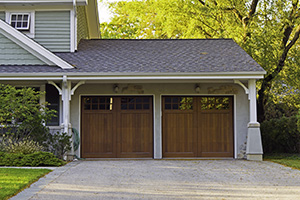
If you're eager to
sell—or just want to make some changes to test reactions—now's the time
to save yourself some grief by learning which upgrades increase your
house's value in potential buyers' eyes and which leave them stone cold.
And while you're at it, never forget the first rule of upgrades,
according to Remodeling magazine's Cost vs. Value Report for 2019:
"Think like a real estate broker." Read on to see why that includes
focusing heavily on curb appeal and first impressions.
Worth It: A New Garage Door
It ranked first on the magazine's list of projects, with a 97.5% return
on investment thanks in part to its relatively low cost.
Not Worth It: Upscale Bathroom Remodeling
Want an easy way to save $60,000 or so? Don't spend it on installing
the whirlpool tub, heated towel bars, and stone countertops of your
dreams. Why? Because they're your dreams. And as Remodeling magazine
notes, "Because of the vast differences in aesthetic tastes, one
person's elegant new bath will be viewed by a range of other prospective
buyers as ‘tacky and outdated and in desperate need of a reset.'"
Worth It: A Bigger Rug
At least some buyers will judge the size of a room based on the size of
the rug. Going bigger is actually a trick some real estate moguls have
been known to use. Since the living room is likely the first interior
part of the house buyers will see—and, remember, first impressions
matter—bet on them extrapolating from it to guesstimate the entire size
of the house.
Not Worth It: A Midrange Backyard Patio
It's in the backyard, right?—emphasis on "back." Which explains why it only garnered a 55.2% return on investment.
Not Worth It: A Major Upscale Kitchen Remodel
Another of those "differences in aesthetic tastes" issues. Better off
to stick to repainting the walls or resurfacing cabinets, if need be.
Worth It: A New Roof
In fact, given that it's such a prominent part of the house, you might
call the roof the ultimate curb enhancer: If buyers like what they see,
you're halfway home; if they don't, they may look for even more things
to hate and certainly won't be quick to open their wallets. Or, as
Remodeling magazine says about curb appeal: "The impact these
impressions make is critical in setting the stage for what a buyer is
willing to pay for a home." If your roof needs replacing, check out GAF
(gaf.com), North America's largest roofing manufacturer.
August 11, 2019
Four Things You Might Not Know About Home Staging
Photo © KatarzynaBialasiewicz - iStockphoto

The National
Association of Realtors conducted a survey of active agents to research
the benefits and disadvantages of staging a home. Here is a look at four
statistics taken from this survey that suggest that staging your home
is a good idea.
1. Staging Your Home Increases the Selling Price
The results of the survey show that 48% of the respondents found that
home staging increases the sale price by a value of 1–20%. The agents
determined their answers by comparing the selling prices of staged homes
with those of similar homes that did not undergo this type of
preparation. Buyers' agents also suggested that a sale was more likely
if the staging decor matched the homebuyers' preferences.
2. Viewing a Staged Home Online Increases a Buyer's Willingness to Visit
According to 77% of the survey's respondents, staged homes helped
buyers imagine moving into them. Potential buyers are also more likely
to complete a walkthrough with an agent if the home is staged.
3. Home Staging Decreases a Property's Time on the Market
The study found that buyers are more likely to view and buy a home when
it has been staged for its online listing. Moreover, buyers are quicker
to set up an appointment when the home has been staged according to
their personal preferences for colors and styles of furniture and
accessories.
4. Staging Your Home May Simplify Moving
When a homeowner takes on the task of staging a room, the first chore
is to get rid of the clutter. Doing so also makes it easier to pack up
once the home sells. Most real estate agents do not ask sellers to stage
every room of a home. Instead, they suggest that homeowners tackle the
living room, kitchen, and master bedroom. However, sellers can stage
more rooms if they believe it will lead to a quicker sale. If sellers
choose to do more, survey respondents suggested staging the dining room,
primary bathroom, and yard.
If you want to sell your home and are considering home staging, you
should start by decluttering each room to prepare for the process. If
you'd like more help with staging your home to sell, please contact me
today. As an experienced real estate agent, I know what buyers are
looking for in a home. I can also help you with home staging advice or
connect you with a professional home stager.
1. Staging Your Home Increases the Selling Price
The results of the survey show that 48% of the respondents found that home staging increases the sale price by a value of 1–20%. The agents determined their answers by comparing the selling prices of staged homes with those of similar homes that did not undergo this type of preparation. Buyers' agents also suggested that a sale was more likely if the staging decor matched the homebuyers' preferences.
2. Viewing a Staged Home Online Increases a Buyer's Willingness to Visit
According to 77% of the survey's respondents, staged homes helped buyers imagine moving into them. Potential buyers are also more likely to complete a walkthrough with an agent if the home is staged.
3. Home Staging Decreases a Property's Time on the Market
The study found that buyers are more likely to view and buy a home when it has been staged for its online listing. Moreover, buyers are quicker to set up an appointment when the home has been staged according to their personal preferences for colors and styles of furniture and accessories.
4. Staging Your Home May Simplify Moving
When a homeowner takes on the task of staging a room, the first chore is to get rid of the clutter. Doing so also makes it easier to pack up once the home sells. Most real estate agents do not ask sellers to stage every room of a home. Instead, they suggest that homeowners tackle the living room, kitchen, and master bedroom. However, sellers can stage more rooms if they believe it will lead to a quicker sale. If sellers choose to do more, survey respondents suggested staging the dining room, primary bathroom, and yard.
If you want to sell your home and are considering home staging, you should start by decluttering each room to prepare for the process. If you'd like more help with staging your home to sell, please contact me today. As an experienced real estate agent, I know what buyers are looking for in a home. I can also help you with home staging advice or connect you with a professional home stager.
July 31, 2019
3 Expert Insights On Inventory In The Current Market

The current housing landscape presents greater home values, low interest rates, and high buyer demand. All of these factors point to the strong market forecasted to continue throughout the rest of the year.
There is, however, one thing that may cause the industry to tap the brakes: an overall lack of housing inventory. Buyer demand naturally increases during the summer months, but the current supply is not keeping up.
Here is a look at what a few industry experts have to say:
Lawrence Yun, Chief Economist at National Association of Realtors
“Imbalance persists for mid-to-lower priced homes with solid demand and insufficient supply, which is consequently pushing up home prices.”
Mark Fleming, Chief Economist of First American
“Market conditions are ripe for increasing home sales with one glaring exception. The supply of homes for sale remains tight, keeping existing home sales below potential.”
Danielle Hale, Chief Economist of Realtor.com
“We're not seeing as many new listings come up on the market…It was only 18 months ago that the number of homes for sale hit its lowest level in recorded history and sparked the fiercest competition among buyers we've ever seen.”
Bottom Line
If you’re thinking of selling, now may be the time. Demand for your house will be strong during a period when there is very little competition, ideally leading to a quick sale and a great return on your investment.
